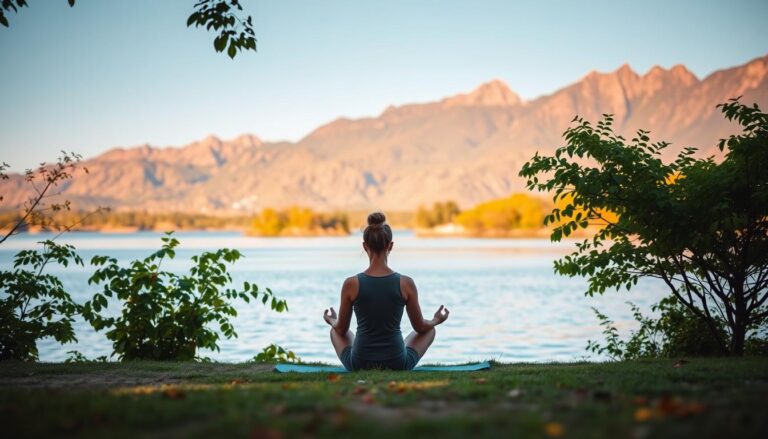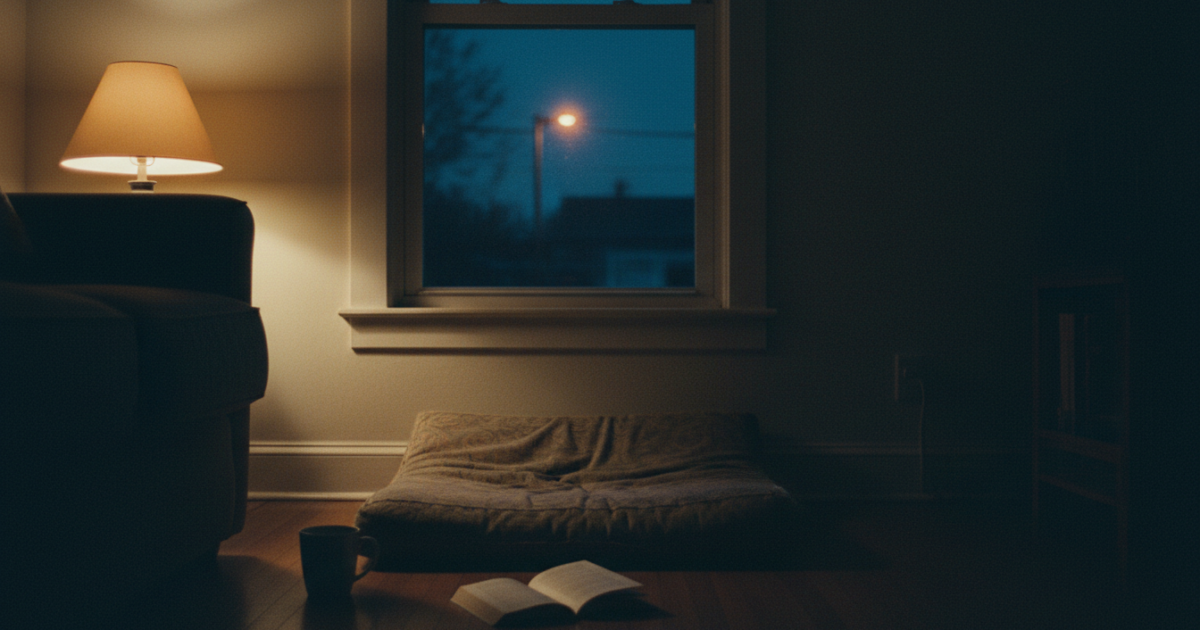
Night meditation is the older arrangement, and I didn’t get there by reading about it. I got there by noticing, years later, that the practices which had actually moved something in me were all scheduled by somebody else — and that somebody kept picking the dark.
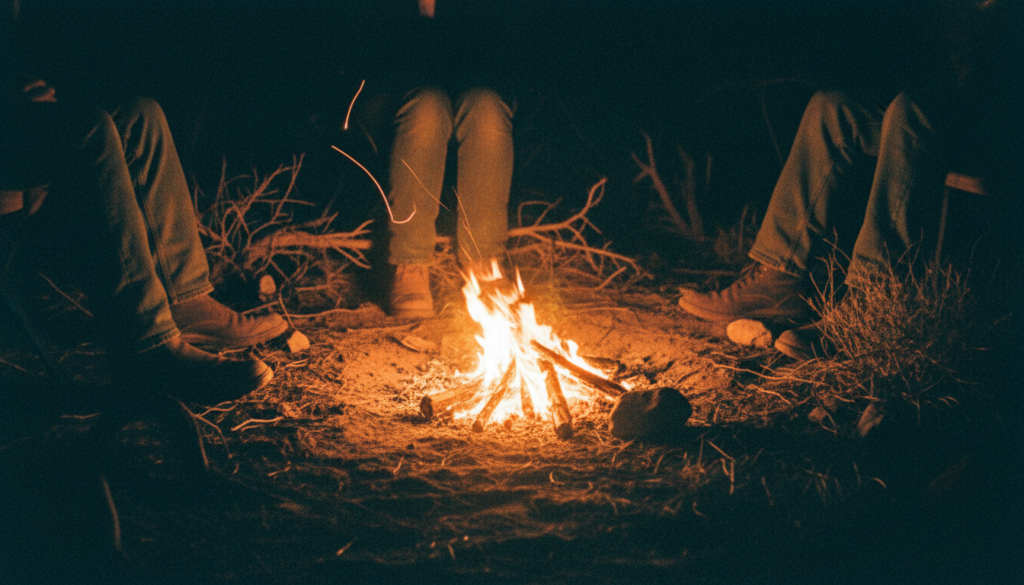
Not every time. The tidy version of this story is the one I trust least, so here’s the untidy one. In the eco-village below Annapurna the bowls were a daytime practice: morning light coming up over the rice terraces, a room that smelled of dust and warm metal. Nothing nocturnal about it. But in the Putumayo, yagé is served after dark and the work runs until the birds start up. Under Real de Catorce, the fire is a night fire. Two out of four. And the two that went furthest into me were both night meditations in the most literal sense, neither of them nocturnal by accident.
Then I came home to a culture that had stamped a time on the whole thing. Ten past six. Before the house wakes up, before the commute. The apps send their reminder with breakfast. The studios schedule the seven o’clock class. Every article about building the habit tells you to attach it to the coffee, and I’ve written a few of those sentences myself.
Nobody sat down and decided the dark was wrong. It lost on logistics. Morning is the only hour a working adult can reliably defend, so morning won — and after a couple of decades the thing that won started to look like the thing that was correct. This is the second piece in a run about what the West left out when it imported all this. The first one was the company you keep while you sit. This one is the night — and the case for making a night meditation your default instead of your fallback.
What a night meditation gets that a seven a.m. one doesn’t
Morning practice happens in front of the day. Whatever you settle at 6:40, you settle it knowing that in forty minutes you’ll be reading email in a moving vehicle. Your body can tell the difference between rest and a staging area. It has been reading that difference since long before you had opinions about it. A morning sit is not a night meditation with the lights on.
A night meditation sits on the other side of everything. Nothing is coming. Nobody’s going to ring. The mail has arrived, the mistakes have been made, the thing you were dreading either happened or got pushed to Thursday. There’s nothing left to prepare for — and that is the one condition you cannot manufacture at breakfast, no matter how good your app is. Every night meditation I’ve sat had that going for it before I even sat down.
The evening isn’t a modern invention, either, which surprised me. When Gandhi Yetish, Jerome Siegel and their colleagues strapped actigraphs onto the Hadza in Tanzania, the Ju/’hoansi San in Namibia and the Tsimane in Bolivia — three societies with no electricity between them, on three continents — nobody went to bed at sunset. Sleep onset came, on average, 3.3 hours after the sun went down. Three-and-a-bit hours of dark, awake time, every night, in the closest thing anyone has measured to a pre-electric baseline.
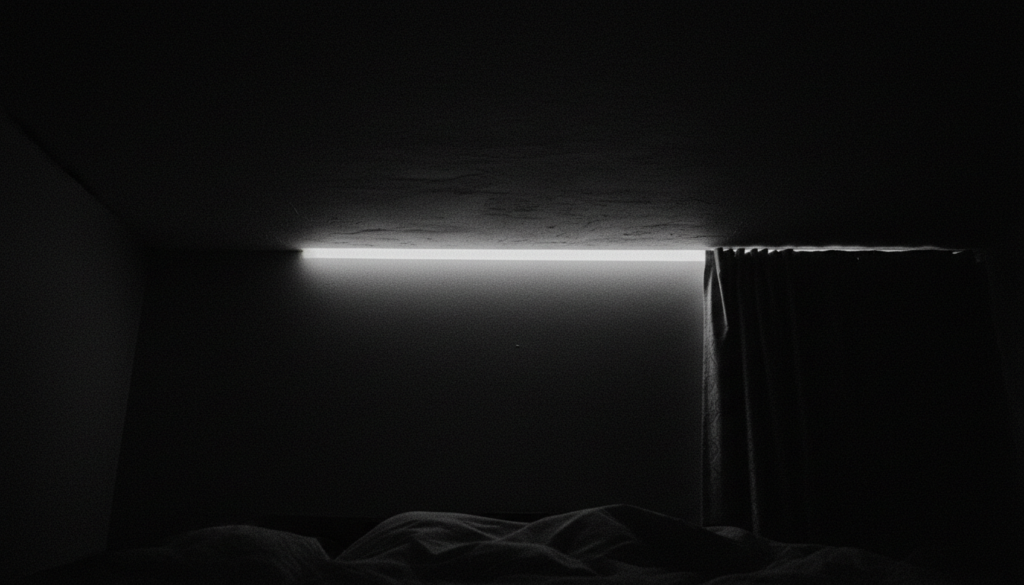
That’s not a gap in the day. That’s a room. And a night meditation is one of the few things that fits in it without needing anything else to move.
The night meditation your great-grandparents had time for
There’s a second, stranger piece of the record, and it’s the one that changed how I think about three in the morning — and about what a night meditation is actually for.
The record that matters most here isn’t ethnographic, it’s archival. The historian A. Roger Ekirch spent years in diaries, court depositions, medical texts and novels, and found that pre-industrial Europeans slept in two shifts with an interval of wakefulness in between — a “first sleep” and a “second sleep,” with an hour or so of the night sitting open between them. Writing in the journal Sleep in 2016, he pushed the claim wider: “biphasic sleep was not unique to Western households. Instead, it occurred well beyond the bounds of Europe and North America in other cultures and continents, including the Middle East, Africa, South Asia, Southeast Asia, Australia, and Latin America.”
What people did in that hour is the part I keep coming back to. They prayed. They talked. They lay there. Ekirch quotes an account of the Woolwa in Central America in which, after the first sleep, the men “would gather round the fires from their respective quarters in the lodge, and, as they warmed themselves in the flames from the chill of the night air, would enjoy some yarn with a quiet chuckle.”
That is a night meditation with a fire in the middle of it, whether or not anyone in that lodge would have used the word. People around it, nothing to accomplish. I’ve sat at that fire in Mexico. It didn’t feel exotic. It felt like the most ordinary thing in the world, which is exactly what bothers me about the way we do it now.
The laboratory half of the night meditation story is a small experiment from 1992. Thomas Wehr at the National Institute of Mental Health moved healthy volunteers from a normal sixteen-hour photoperiod to a ten-hour one — long nights, no electric light to cheat with — and their sleep came apart on its own. It “divided into two symmetrical bouts, several hours in duration, with a 1–3 h waking interval between them.” Take away the light and the two-shift night rebuilds itself in under a month.
More recently, David Samson’s team put actigraphs on twenty-one people in a non-electric farming community in Madagascar and recorded 292 nights. They found a peak in activity after midnight on 49% of them, which they read as segmented sleep, “similar to the ‘first’ sleep and ‘second’ sleep reported in the historical record.” Half the nights in that village have a hole in the middle of them, exactly where a night meditation would sit.
Now the part that cuts the other way
Here’s where I have to slow down, because the story is too good and the evidence doesn’t fully cooperate.
That same Yetish study — the one I used above for the 3.3 hours — reports that in all three groups the sleep period “was not interrupted by extended periods of waking.” No first sleep. No second sleep. Three of the least electrified populations on earth, sleeping straight through. Ekirch has argued back in print; the disagreement is live and I’m not going to pretend it’s settled in my favour. If anyone has sold you a night meditation on the strength of the first-sleep story, they sold you half a source.
So here’s what I actually think, with the seams showing. The record is strong enough that waking at three in the morning deserves a better explanation than “disorder.” It is not strong enough for anyone to sell you a story about your ancestors meditating at midnight, and if you see that story told with confidence, the confidence is the tell. Both halves of that sentence matter. Drop the second one and you’ve got wellness content. A night meditation doesn’t need the ancestors to be worth doing.
There’s a related gap worth knowing about. In 2010, a group of anthropologists and sleep researchers published a paper in Current Anthropology proposing the night as “a new field of anthropological research,” having noticed “an amazing theoretical and methodological gap in research on the nocturnal segment of the 24-hour day-night cycle.” The discipline whose entire job is watching people had, by its own admission, largely gone to bed. Which is part of why the night meditation has almost no literature of its own, while the morning kind has a shelf.
What the dark actually does
Wehr ran a second study the following year that I’d love to over-read and won’t. Fifteen people, long nights against short ones. The nocturnal window of high prolactin secretion stretched from 9.9 hours to 12.9. Melatonin stretched too. Sleep went from 7.6 hours to 10.6. None of that is a night meditation instruction. It’s what a long night does to an endocrine system, nothing more.
You’ll find this study quoted all over the internet with an extra sentence attached — that the volunteers described the waking hour as something like quiet meditation, with prolactin many times its daytime level. It’s a lovely sentence, and it would have been the best line in any article about night meditation. I read both abstracts directly, and it isn’t in either of them. It may well be in the full papers, which sit behind paywalls I didn’t get through. I’m not going to hand it to you as a fact because it would have made this article better.
What I’ll say instead is what the dark does that I can vouch for from the inside, having sat in a lot of it. It takes away the room. Vision is the sense that keeps you pointed outward, cataloguing, checking, comparing — and at night most of that just stops working. You’re left with sound and skin and whatever your body is doing. A night meditation doesn’t require you to withdraw your attention from the world. The world withdraws first, and you sit in what’s left.
The other thing it takes away is the audience. Nobody can see you at midnight. Anyone who has cried during a practice and then apologised for it knows exactly what that hour is worth. That’s the quiet argument for a night meditation, and it doesn’t need a study behind it.
A night meditation you can run this week
Two versions of the night meditation. One before bed, one for the wake-up you didn’t ask for.
- Before bed, leave the last twenty minutes screen-free — not as a virtue, but because a screen is the only thing in your house keeping the room bright. Let it get dark first. That’s the whole reason.
- Sit up. Don’t lie down. Lying down is sleep’s posture and this is not aimed at sleep, which is the single most common way a night meditation goes wrong.
- Dim the lights rather than killing them, at least for the first week. Full dark is a lot on night one.
- Use sound as the anchor, not the breath. A house at eleven o’clock has a soundtrack — the fridge cycling, traffic thinning out, someone’s television through a wall. Rest attention there and let it move when it moves.
- Ten minutes of night meditation. Then stop, even if it’s going well. Especially if it’s going well.
The 3 a.m. night meditation is a different animal, and the rules invert. Don’t turn on a light. Don’t check the time — the time is the enemy, and knowing it starts the arithmetic about how wrecked you’ll be. Don’t aim at falling back asleep, because aiming is the thing that keeps you up; I’ve written a whole piece about why trying to fall asleep is self-defeating. Count exhales to ten and start again at one when you lose the thread, which you will. Treat the hour as yours instead of stolen.
One borrowed rule, and I’ll credit it plainly: if twenty minutes go by and you’re wired rather than settled, get up and leave the bedroom. That’s stimulus control, straight out of cognitive behavioural therapy for insomnia, and it works better than anything I can offer you from a cushion.
Do the before-bed night meditation three nights a week for a month. Not seven. Seven is how people quit.
When a night meditation is the wrong idea
I’d be doing the same thing I complained about at the top if I only gave you the flattering half.
In 2022, Andrew Tubbs and colleagues published a review in Frontiers in Network Physiology laying out what they call the Mind after Midnight hypothesis: that being awake at night combines sleep loss with falling circadian arousal to produce “attentional biases, negative affect, altered reward processing, and prefrontal disinhibition.” They put it next to the day-night pattern in suicide, violent crime and substance use. Their own closing caution is worth quoting: “All aspects of this hypothesis require empirical validation.” It’s a hypothesis, and they say so.
I still take it seriously, because it matches something anyone who has been awake at four in the morning already knows. Everything is worse then, and it isn’t a reliable narrator. So: no decisions at that hour. No difficult conversations, no email, no re-reading the message. A night meditation is a place to sit, not a place to think things through — and if the thinking is what woke you, sitting is the better of the two options, but a therapist in daylight is better than both.
Three clear stop signs. If you’re in a depressive episode, in crisis, or anywhere near a thought of harming yourself, the night is the wrong classroom entirely — call someone today, not after another sit, and no night meditation is a substitute for that call. If you work shifts, skip all of this; your circadian system is already being asked to do enough. And never trade sleep for practice. Sleep beats meditation. It isn’t close, and anyone who tells you otherwise is selling a discipline they can charge for.
The hour is still there
The traditions I trained in didn’t choose the dark for atmosphere. They chose it because it’s when a person stops performing, when there’s nothing left to arrange, and when the thing you’ve been holding all day finally has somewhere to go. Then that hour got filled — first with lamps, then with screens, then with a notification telling us the best time to practise is before work. A night meditation was never the alternative option. It was the original one.
Nobody in the Putumayo ever told me the night was calming. It isn’t. It’s just honest, which is a different and better quality, and it’s available to you tonight at eleven o’clock for the price of turning the lights down.
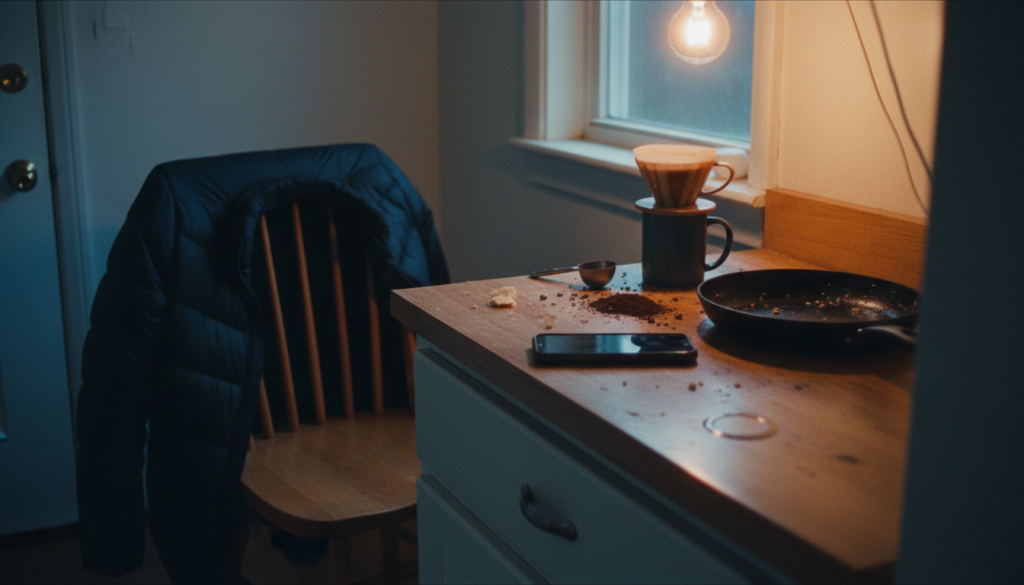
Your body isn’t broken because it wakes at three. It’s bracing, out of loyalty, at the hour it has the least help. A night meditation is somewhere to sit. Give it that much.
RESOURCES
If you're living through this alongside a cancer diagnosis, your own or someone else's, Meditation for Cancer goes further into it.