Acupuncture for fertility usually arrives as a tip, not a treatment plan. Somebody in the waiting room had it before her transfer. A forum thread swears by it. A practitioner rents a room near the clinic and keeps her diary open on transfer days. By the time you're lying on the table it feels less like a choice and more like a box you'd be careless not to tick.
I've spent a good part of my life near healers who work with their hands, from the Putumayo in southern Colombia to the Maya side of Mexico, where I live now. So I don't come to this as a skeptic looking for a fight. I come to it the way I'd come to any ceremony somebody was selling me. What does it do? Who measured it? And what did they compare it with?
That last question turns out to be the whole story. In about twenty years, the research on acupuncture for fertility went from a small German study that looked like a breakthrough, to a large Australian trial that looked like a funeral, and then somewhere stranger: a trial in which the fake needles did better than the real ones. If you're paying for sessions, or thinking about it, the strange part is the one to read slowly.
Where the acupuncture for fertility story started
In 2002 a team in Ulm, Germany, published a short paper in Fertility and Sterility. Wolfgang Paulus and his colleagues took 160 women going through assisted reproduction, all with good-quality embryos, and split them into two groups of 80. One group had acupuncture for 25 minutes before and 25 minutes after embryo transfer. The other group had the transfer and nothing else.
The numbers were hard to ignore. Six weeks later, 34 of the 80 women who had needles (42.5%) showed a fetal sac on ultrasound, against 21 of 80 (26.3%) in the control group. A sixteen-point gap, from fifty minutes on a table. Those two numbers became the founding claim of acupuncture for fertility as a business.
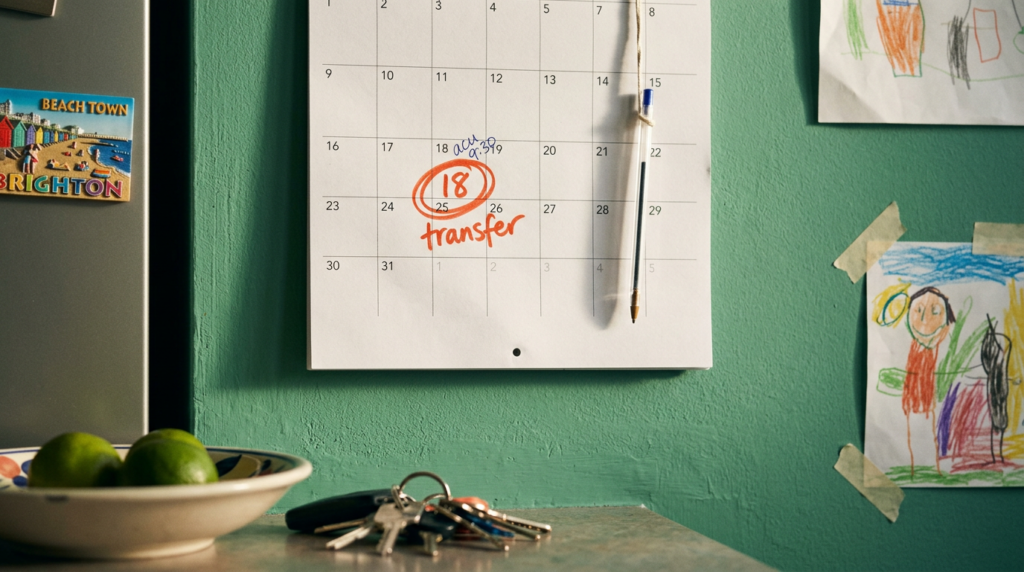
That paper did more for acupuncture for fertility than any advertising budget could have. Clinics began offering transfer-day sessions. Practitioners built whole specialties around the IVF calendar.
Read the design again, though. The control group didn't get a pretend treatment. They got nothing. They didn't lie down for an extra fifty minutes, nobody touched them, nobody sat with them in a quiet room before the most frightening ten minutes of the cycle. Whatever the needles did, this comparison couldn't pull it apart from everything that came with the needles. And the outcome was a pregnancy on a scan, not a baby taken home. That missing comparison is the hole every later study of acupuncture for fertility has tried to fill.
The 2008 meta-analysis and its small print
Six years later, Eric Manheimer and colleagues at the University of Maryland pooled seven trials of acupuncture for fertility treatment, 1,366 women undergoing IVF, in a meta-analysis for the BMJ. Acupuncture given around embryo transfer was linked to higher odds of clinical pregnancy (odds ratio 1.65) and of live birth (1.91). Their headline: roughly one extra pregnancy for every ten women treated.
Further down sat a sentence that got far less airtime. When the authors looked only at the three trials whose control groups already had the higher pregnancy rates, the benefit shrank to an odds ratio of 1.24 and was no longer statistically significant. Put plainly, acupuncture for fertility looked strongest in the clinics where the baseline was weakest. That's the pattern you'd expect if the needles were filling a gap left by something else, rather than adding something of their own.
The authors called their evidence preliminary. The internet didn't.
The trial built to settle acupuncture for fertility
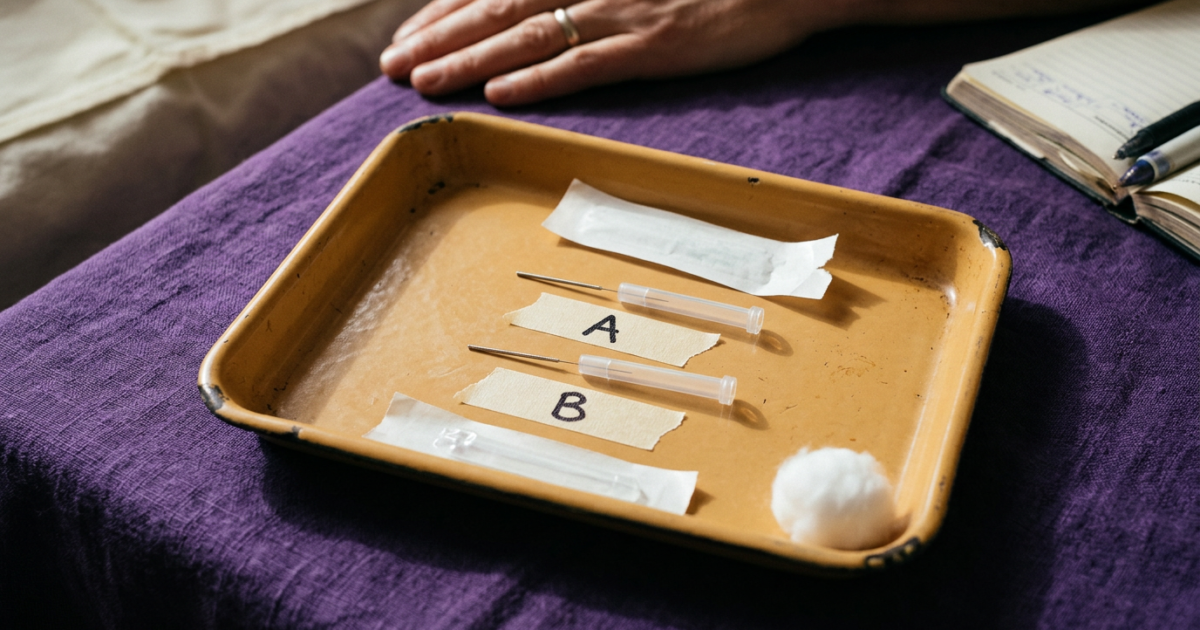
In 2018, Caroline Smith and colleagues published the trial in JAMA that was built to answer the acupuncture for fertility question properly. It enrolled 848 women at 16 IVF centres in Australia and New Zealand. Each woman had three sessions: one between days six and eight of stimulation, then one before and one after transfer. Half had real acupuncture. Half had a sham, a needle that didn't pierce the skin, placed away from the true points.
This time the outcome was the one that counts: live birth. In the acupuncture group, 74 of 405 women took a baby home (18.3%). In the sham group, 72 of 404 (17.8%). Half a percentage point, with a confidence interval running from almost five points worse to almost six points better.
The authors wrote it plainly: their findings don't support using acupuncture to improve live birth rates in IVF. Five years earlier a Cochrane review of twenty randomised trials had reached the same place by another road. It found no evidence that acupuncture improves live birth or pregnancy rates in assisted conception, and no sign of significant side effects either. If you were hoping acupuncture for fertility treatment would add a few points to your odds, that's the honest answer from the best evidence we have.
What the sham group actually received
Here's what I keep coming back to. The women in the sham arm weren't left alone. They lay down. Someone they had been told to trust placed something on their skin, three times, at the worst moments of the cycle. The only thing missing was a needle going in at the right spot.
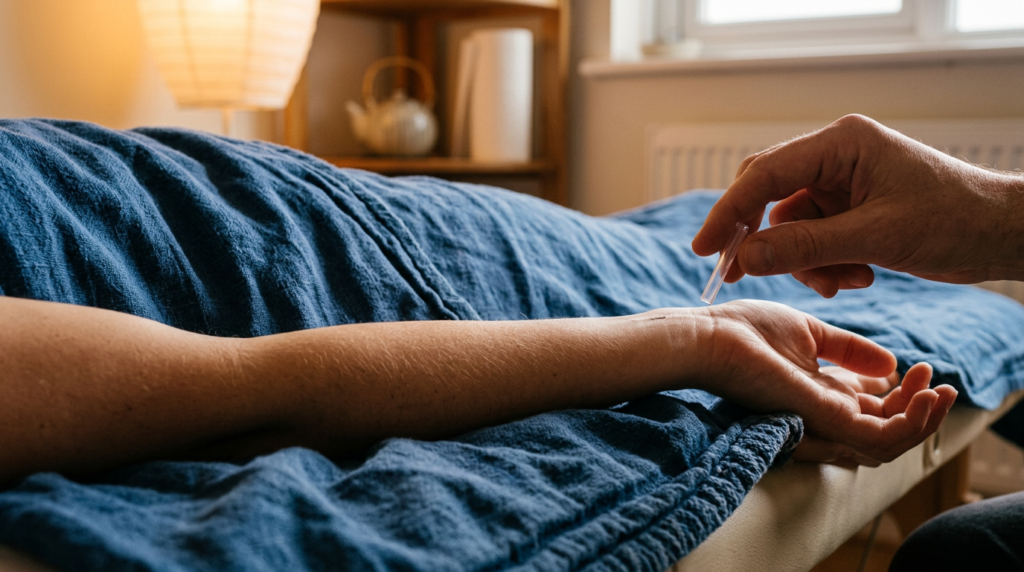
So the JAMA trial didn't test acupuncture for fertility against nothing. It tested the depth and position of the needle against a whole ritual of care with the needle taken out. And the ritual, on its own, did just as well.
Now the part that argues the other way
If you practise acupuncture for fertility, you've already spotted the weak joint in that argument, and you're right to. A sham is a fair control only if it's inert. Nobody has shown that it is.
The most awkward result in the whole acupuncture for fertility literature comes from Hong Kong. In 2009, So and colleagues reported in Human Reproduction on 370 women randomised on transfer day to 25 minutes of real or placebo acupuncture before and after the transfer, double-blind. The placebo group had the higher overall pregnancy rate: 55.1% against 43.8%. Ongoing pregnancy and live birth didn't differ significantly. The authors' conclusion was short: placebo acupuncture may not be inert.
Acupuncturists have pressed the same point against the 2018 trial. A 2019 commentary from the Chengdu University of Traditional Chinese Medicine argued that the point selection didn't match earlier protocols, that three sessions may be too few, and that a sham touching the skin can't be treated as zero. Those are fair questions. They also cut both ways. If the fake version works as well as the real one, then the active part isn't the part the practitioner spent years learning.
And the meta-analyses keep coming. A 2026 review in Frontiers in Endocrinology pooled 11 trials and 885 women with diminished ovarian reserve and reported much larger gains in clinical pregnancy and live birth. Its own grading put the certainty of that evidence between very low and moderate. Small trials with open-label controls are exactly the kind of evidence that looked good for acupuncture for fertility in 2002 and then shrank when a large sham-controlled trial arrived. Maybe this subgroup is different. Nobody has run the big trial to find out. Until somebody does, the honest summary of acupuncture for fertility in diminished ovarian reserve is two words: promising, unproven.
Why a fake needle isn't nothing
The Hong Kong team measured more than pregnancy. Cortisol fell after both real and placebo sessions. So did anxiety scores. So did blood flow in the lining of the uterus. On none of them was there a difference between the two groups.
Read that as somebody who lives inside a nervous system rather than as a statistician. Lying still for twenty-five minutes in a warm room, with a person whose only job for that half hour is to stay with you, lowers a stress hormone. That isn't a trick, and you don't need to believe in meridians for that part of acupuncture for fertility to work. I wrote earlier this year about what stress does and doesn't do to fertility; the short version is that the body reads safety before it reads anything else, and it reads it from very ordinary signals. Your body isn't a machine that needs the right input at the right coordinate. It's an animal that needs to stop bracing.
What both groups were really paying for
Strip the theory out and a course of acupuncture for fertility gives you three things the IVF clinic usually doesn't. Time lying down. A person who isn't watching a monitor. And a ritual with a beginning and an end on the hardest days of the cycle, which are the transfer and the two week wait after it, when there's nothing left to do except carry not knowing.
Those three things are real, and they're worth something. They're just not what the leaflet sells. The leaflet sells a better implantation number. The evidence sells you a better hour.
So here's how I'd describe acupuncture for fertility to a friend sitting across my kitchen table. It probably won't change whether the embryo implants. It may well change how you get through the day it goes in, and the ten days after. Whether that's worth the fee depends on what else you've got, and what else you're paying for.
That matters for money. Add-ons pile up quietly: a supplement here, an extra scan there, a course of acupuncture for fertility sessions next door. IVF burnout is partly that pile, and the guilt that comes with every item you decide to skip. If acupuncture for fertility gives you an hour of calm you can't find any other way, it's a reasonable thing to pay for, as long as you know that's what you're buying.
It matters for the partner in the room too. Almost every acupuncture for fertility trial I read enrolled women only. His stress, his sleep, his semen analysis don't appear anywhere in the data. If the useful ingredient is calm and company, there's no reason he can't share it, and no reason the two of you can't build that hour at home. The other half of the story has been missing from fertility care for a long time. It's missing here as well.
How to try acupuncture for fertility without betting the cycle on it
- If you start acupuncture for fertility during a cycle, tell your fertility clinic first, and ask what they think about sessions around transfer. Some clinics run their own.
- See a licensed practitioner who uses single-use sterile needles. The low side-effect record in the trials rests on trained hands.
- Ask for the price of the full course before the first session, and decide in advance what you'll drop if money gets tight. Medical treatment comes first.
- Never move a transfer date or skip a medication to fit a session in.
- If what you're after is the calm, test the free version first: twenty-five minutes lying down in a quiet room, phone in another room, on transfer day and through the wait. You don't need a needle to find out whether that helps you.
When to stop reading and call your clinic
Acupuncture for fertility is not a reason to wait longer before getting tested. If you're under 35 and have been trying for twelve months, or 35 or older and trying for six, see a fertility specialist, and make sure the first round of tests includes a semen analysis. If the tests come back clear, unexplained infertility is a diagnosis with its own next steps, and none of them is waiting. Go sooner if your periods are irregular or absent, if there's a known history of endometriosis or pelvic infection, or after two or more miscarriages. During treatment, any bleeding, severe pelvic pain or sudden swelling goes to the clinic first, not to the acupuncturist.
I still believe in hands. The research on acupuncture for fertility didn't change that. It changed what I'd tell a friend to pay for, and what I'd tell her she was getting.
References
Paulus WE, Zhang M, Strehler E, El-Danasouri I, Sterzik K (2002). Influence of acupuncture on the pregnancy rate in patients who undergo assisted reproduction therapy. Fertility and Sterility, 77(4), 721–724. https://doi.org/10.1016/s0015-0282(01)03273-3
Manheimer E, Zhang G, Udoff L, Haramati A, Langenberg P, Berman BM, Bouter LM (2008). Effects of acupuncture on rates of pregnancy and live birth among women undergoing in vitro fertilisation: systematic review and meta-analysis. BMJ, 336(7643), 545–549. https://doi.org/10.1136/bmj.39471.430451.BE
Cheong YC, Dix S, Hung Yu Ng E, Ledger WL, Farquhar C (2013). Acupuncture and assisted reproductive technology. Cochrane Database of Systematic Reviews, 2013(7), CD006920. https://doi.org/10.1002/14651858.CD006920.pub3
Smith CA, de Lacey S, Chapman M, Ratcliffe J, Norman RJ, Johnson NP, Boothroyd C, Fahey P (2018). Effect of acupuncture vs sham acupuncture on live births among women undergoing in vitro fertilization: a randomized clinical trial. JAMA, 319(19), 1990–1998. https://doi.org/10.1001/jama.2018.5336
So EW, Ng EH, Wong YY, Lau EY, Yeung WS, Ho PC (2009). A randomized double blind comparison of real and placebo acupuncture in IVF treatment. Human Reproduction, 24(2), 341–348. https://doi.org/10.1093/humrep/den380
Wang YN, Zhao Y, Yu SY, Hu YP (2019). Consideration and analysis on "Effect of acupuncture vs sham acupuncture on live births among women undergoing in vitro fertilization" in JAMA [in Chinese]. Zhongguo Zhen Jiu, 39(7), 787–791. https://doi.org/10.13703/j.0255-2930.2019.07.028
Xu L, Liang X, Wang W, Zhang R, Lin G, Cao K, Sun P, Fan L (2026). Clinical evidence of acupuncture for infertile women with diminished ovarian reserve undergoing IVF/ICSI: a systematic review and meta-analysis. Frontiers in Endocrinology, 17, 1840157. https://doi.org/10.3389/fendo.2026.1840157