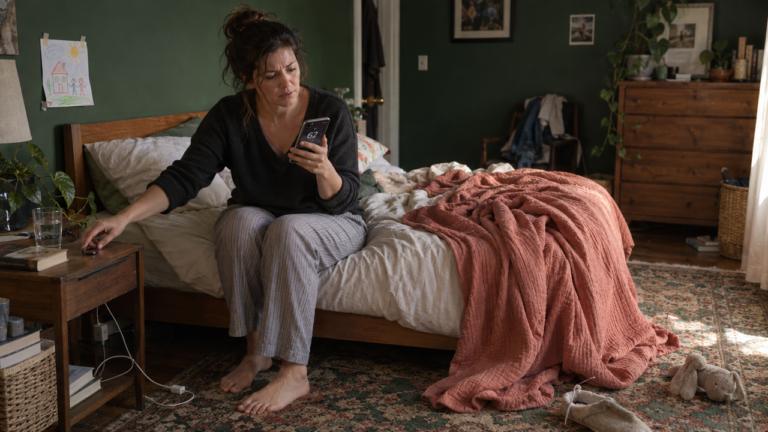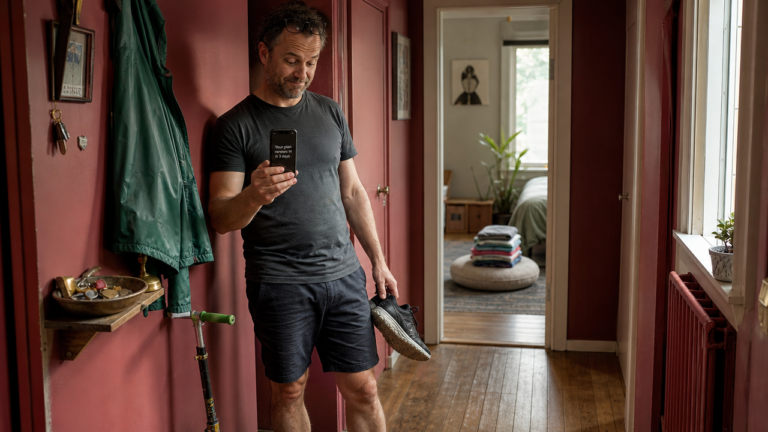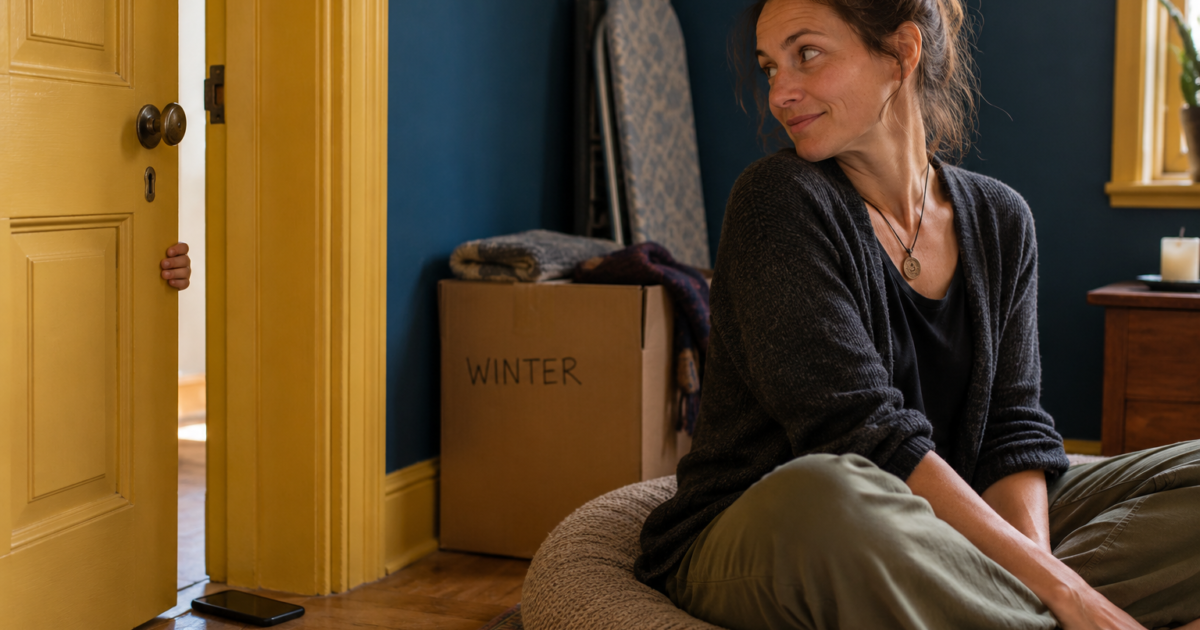
The spare room still has a box of winter clothes in the corner, but the rest is cleared. A round cushion on a rug, a candle you've lit twice, a small plant that wants more light than the window gives it. You shut the door, leave the phone face-down on the hallway floor, and sit. Nobody in the house knows what happens in the next twenty minutes.
That's the point.
A meditation room, or a meditation corner if the flat is small, is the fourth thing in this series that the West added to practice. In September I wrote about the meditation timer, then about meditation tracking, the score that arrives after you sit, and then about the meditation subscription that charges you whether you sit or not. The meditation room is the quietest of the four. It doesn't beep, count or bill you. It just closes.
I'm not against it. I've sat in borrowed rooms with the door shut more times than I can count. But the traditions I learned from almost never put the practice behind a closed door, and when they did send someone off alone, somebody was waiting when they came back. That gap is what this piece is about.
Why people build a meditation room
Search for meditation room ideas and you get a decorating project: floor cushions, a low altar, a salt lamp, a soft rug, a palette of off-whites. Most of that is shopping. Underneath it there are three real needs, and they're worth naming before you buy anything.
The first is quiet. If you live with children, a partner who takes calls at the kitchen table, or a street that never stops, a door is the cheapest silence there is. The second is permission. A meditation room tells everyone, you included, that these twenty minutes aren't available for anything else. The third is privacy, and it's the one people talk about least. You can cry in there. You can fidget, give up after four minutes, start again, and nobody sees.
All three are fair. The question is what the closed door also keeps out.
What does a meditation room actually change?
Mostly it changes who's watching, which is nobody. Practice in a meditation room has no witness, no start signal you didn't set yourself, and no one who notices when you stop coming. For a lot of people that's a relief. For some people, on some days, it's the problem.
Where the traditions sat
In Playa del Carmen, where I practise now, a group of friends goes into the temazcal at every new moon and every full moon. The lodge is low and round and dark, and about as private as a crowded lift. Before anyone goes in, people gather at the fire. Each person gets a small piece of wood to put into it, for whatever they've brought with them that night. Nobody says what. Everyone watches the wood go in.

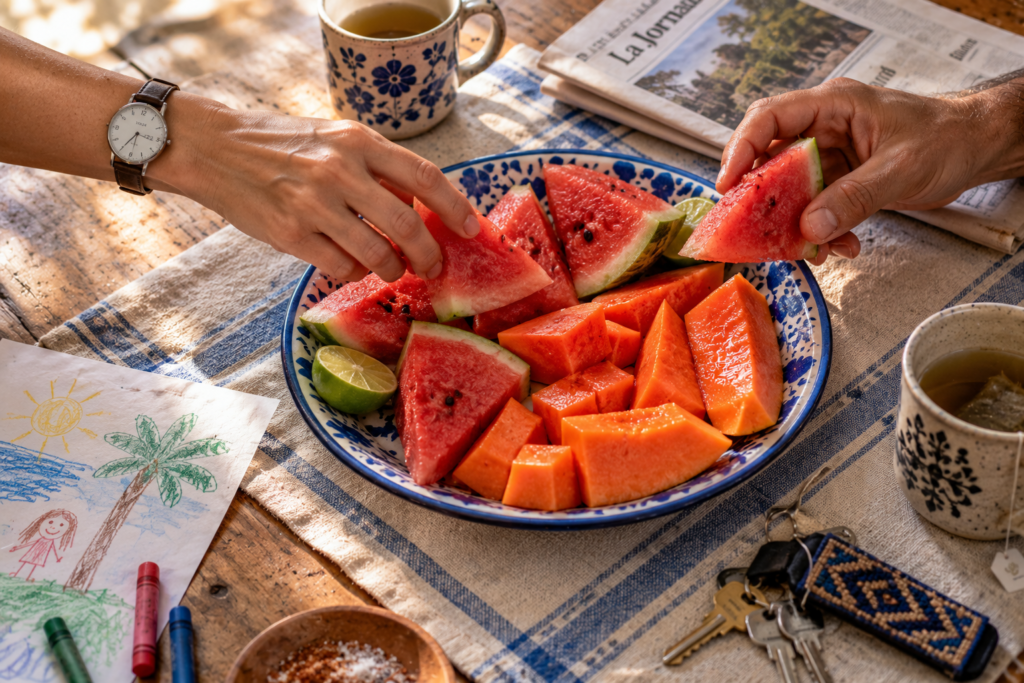
That's the opposite of a meditation room. You arrive in front of other people. Whatever happens inside happens shoulder to shoulder, in the heat, with someone singing. And when it's over you don't walk to your car. You crawl out low, lie on the ground beside the lodge for a while, rinse off, and then there's fruit. Watermelon, pineapple, papaya, orange, eaten together, a small feast for being alive.
The other traditions I've written about here work the same way. The batá drums in Cuba need three drummers and a room full of people who answer them. The yagé night in Putumayo happens in a shared space, with one song carrying everyone through it. I wrote a whole piece on how, out there, nobody meditates alone. The room was shared, and its door opened outward.
Does sitting together change what you feel?
There's a strand of research on this, though none of it is about meditation. In 2014, Garriy Shteynberg and colleagues published five experiments on what they called group attention: attending to the same thing, at the same moment, as people you see as your group. Scary adverts felt scarier. Sad pictures felt sadder and happy ones happier. In one study, a video about homelessness led to bigger donations to homeless charities when people watched it with their group. Watching alone, watching with strangers, or watching the same thing at a different time didn't do the same.
I'm careful with this one. These were lab experiments with adverts and videos, not people sitting in silence, and nobody has run the same test on a meditation room against a meditation hall. But it puts a name to something anyone who has sat in a circle already knows. Attention shared in real time is heavier. It carries more.
What Western courses put inside the meditation room
Here's what surprised me. The best-known Western mindfulness courses don't try to get rid of the private room. They're built on it.
Mindfulness-Based Stress Reduction and Mindfulness-Based Cognitive Therapy, the two eight-week courses most of the research is about, meet as a group once a week. The bulk of the practice happens at home, alone, in between. In 2017, Christina Parsons and colleagues pooled 43 studies with 1,427 participants and found that people did about 64% of the home practice they were given. That came to roughly 30 minutes a day, six days a week. Across 28 of those studies, more home practice went with better results: a small association, but a real one (r = 0.26).
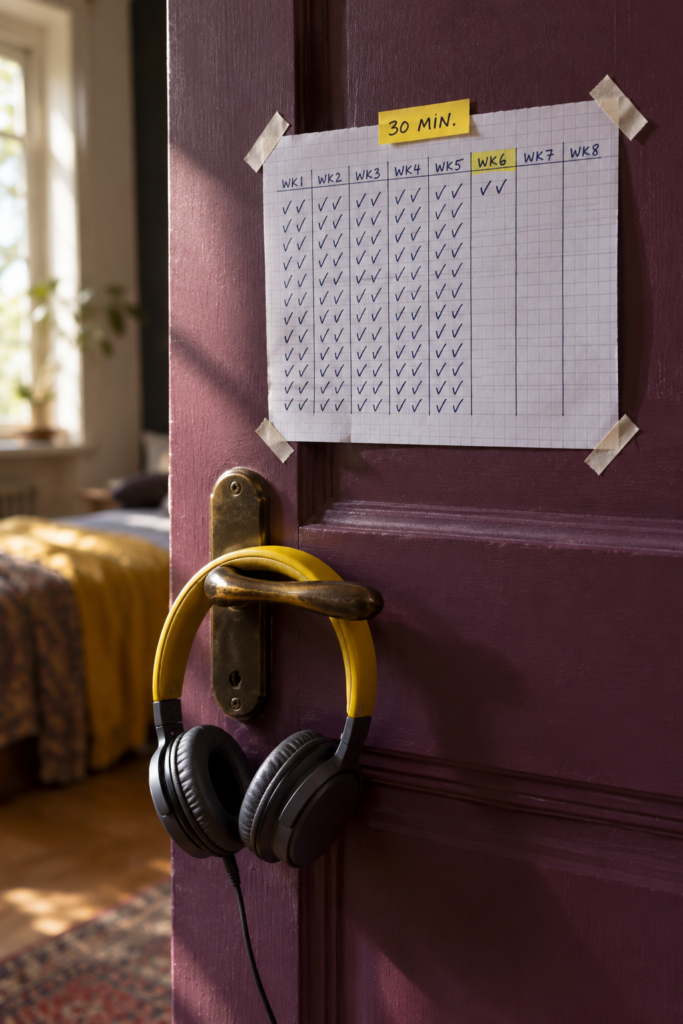
So the Western model is a hybrid, and a sensible one. One evening a week in a room full of people, six days in your own meditation room in between. The trouble starts later. The course ends, the weekly group falls away, an app takes over, and only the meditation room is left.
Who notices when it goes wrong in a meditation room?
Most of the time nothing goes wrong. You sit, you wander off, you come back, you get up. But meditation isn't only calming, and the research has spent about a decade catching up with that. I wrote about the wider picture in meditation side effects. This is the part that bears on the closed door.
In 2022, Simon Goldberg, Willoughby Britton, Richard Davidson and a colleague surveyed a population-based sample of US adults. Of the 434 people with meditation experience who completed the follow-up, 32.3% said yes to a general question about meditation-related adverse effects, and half reported at least one specific effect. Anxiety, re-living traumatic memories and feeling emotionally raw came up most often. Some effect on daily functioning was reported by 10.6%, lasting a month or more for 1.2%. And the people who'd had these experiences were just as glad they'd meditated as everyone else.
A few years earlier, Jared Lindahl, Willoughby Britton and colleagues interviewed Western Buddhist practitioners and teachers and catalogued 59 kinds of meditation-related experience, from mild and passing to severe and lasting. They also mapped what made those experiences easier or harder to come through, and one of the four domains they named was relationships.
Now set that beside a meditation room. If something hard surfaces on the cushion, the first person to notice is usually someone who sees you every week. In the temazcal, somebody is lying on the ground next to you afterwards. In a meditation room, the door is shut and the phone is in the hallway.
Now the part that argues the other way
I've made it sound as if the private room were a Western invention. It isn't, and I'd be bending the record to say so.
The traditions had their closed doors too
In the King James Bible, Jesus tells his listeners to "enter into thy closet, and when thou hast shut thy door, pray" (Matthew 6:6). Buddhist hermits have practised alone in caves and huts for centuries. Solitude has a long, respectable history inside the traditions. What the old forms of it usually had, as far as I know them, was a frame: a community that sent you, and somebody you went back to. The meditation room keeps the door and drops the frame.
The shared hall isn't automatically safer
This is the finding that bothers my argument most. In 2019, Marco Schlosser and colleagues surveyed 1,232 regular meditators. A quarter of them, 25.6%, reported particularly unpleasant experiences they thought their practice may have caused. Those who had ever been on a meditation retreat, about the most communal setting there is, were more likely to report them, not less. So were people who did only insight-style practice such as vipassana, and people prone to repetitive negative thinking. Women and religious participants were less likely to.
It was one online survey, and retreat-goers probably practise longer and harder than most, so it doesn't show that a room full of people causes trouble. It does show that company on its own doesn't protect you.
For some people the meditation room is the only option
A carer who gets twenty minutes while someone else naps. A nurse who sleeps through the day. Someone for whom the group is the hardest part, not the easiest. For them a meditation room isn't a lifestyle choice, it's the only door available, and telling them to go and sit in a circle helps nobody.
And here's what I can't settle. I looked for a study that assigned people to solitary home practice or to group practice, same method, same amount of time, and then measured who ran into trouble and who kept going. I didn't find one. So I won't tell you a meditation room makes practice riskier. I'm telling you what's missing from it, and what the traditions put back.
How to set up a meditation room with a door that opens
Keep the room. Add the parts the traditions never left out.
- Tell one person when you sit. Not what happens, just that you're going in and roughly when you'll come out. That's your piece of wood in the fire.
- Leave the door ajar now and then. Let a child or a partner wander in and sit for a minute if they want to. A meditation room that lets other people in stays a room, not a bunker.
- Join one shared sitting a week. A local group, a class, a friend across the kitchen table. The courses with the best evidence keep a weekly group around the home practice, and your own week can do the same.
- Mark the way out. When you get up, do one ordinary thing with another person before you go back to a screen: eat something together, make tea, talk about anything else. In the temazcal it's the fruit. I wrote more about that return in retreat integration.
- Don't decorate first. A cushion, a timer, a door. If you're still using the meditation room in a month, then buy the rug.
When to leave the meditation room and talk to someone
If sitting starts bringing back traumatic memories, panic, or a sense that you or the world aren't quite real, or if your sleep falls apart for more than a few days, stop that practice for now and tell someone you trust. Look for a teacher who knows about meditation difficulties, or a doctor or therapist. If you have thoughts of harming yourself, contact your local emergency number or a crisis line now. None of this means you did it wrong.
The door opens both ways
Back to the spare room, the box of winter clothes, the candle you've lit twice. There's nothing wrong with that meditation room. Plenty of real practice has happened in rooms exactly like it.
The traditions I sit with weren't short of privacy. Inside the lodge, in the dark, nobody can see your face. What they had was a way in that started in front of other people, and a way out that ended with someone handing you a slice of papaya. Your meditation room already gives you the dark. Make sure it gives you the way out as well.
References
Goldberg SB, Lam SU, Britton WB, Davidson RJ (2022). Prevalence of meditation-related adverse effects in a population-based sample in the United States. Psychotherapy Research, 32(3), 291–305. https://doi.org/10.1080/10503307.2021.1933646
Lindahl JR, Fisher NE, Cooper DJ, Rosen RK, Britton WB (2017). The varieties of contemplative experience: a mixed-methods study of meditation-related challenges in Western Buddhists. PLoS ONE, 12(5), e0176239. https://doi.org/10.1371/journal.pone.0176239
Parsons CE, Crane C, Parsons LJ, Fjorback LO, Kuyken W (2017). Home practice in Mindfulness-Based Cognitive Therapy and Mindfulness-Based Stress Reduction: a systematic review and meta-analysis of participants' mindfulness practice and its association with outcomes. Behaviour Research and Therapy, 95, 29–41. https://doi.org/10.1016/j.brat.2017.05.004
Schlosser M, Sparby T, Vörös S, Jones R, Marchant NL (2019). Unpleasant meditation-related experiences in regular meditators: prevalence, predictors, and conceptual considerations. PLoS ONE, 14(5), e0216643. https://doi.org/10.1371/journal.pone.0216643
Shteynberg G, Hirsh JB, Apfelbaum EP, Larsen JT, Galinsky AD, Roese NJ (2014). Feeling more together: group attention intensifies emotion. Emotion, 14(6), 1102–1114. https://doi.org/10.1037/a0037697
The Holy Bible, King James Version. Matthew 6:6. BibleGateway. https://www.biblegateway.com/passage/?search=Matthew+6%3A6&version=KJV