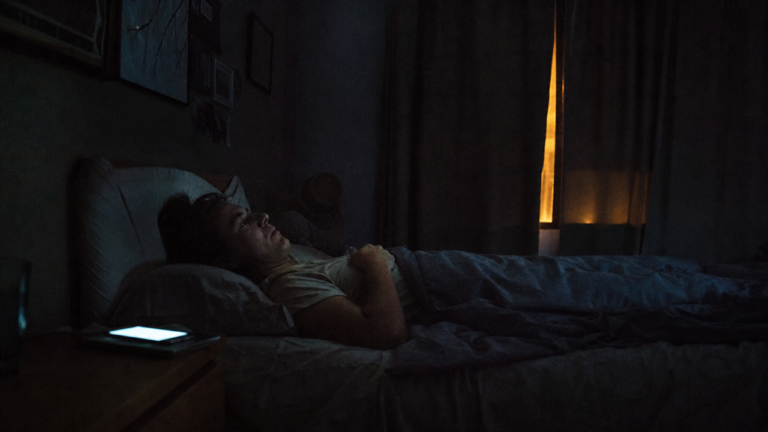
Stress and Fertility – Somewhere around the second year of trying, the advice arrives. It always does. A relative who means well. A friend who got pregnant the month she stopped thinking about it. A stranger in a waiting room who heard one sentence of your story and already has the answer. Just relax. Stop stressing. It’ll happen when you let go.
You smile. You say something polite. And inside, a tired part of you wants to scream — because you have tried to relax. You booked the massage. You downloaded the meditation app and abandoned it by day four. You ran the bath, lit the candle, breathed in for four counts and out for eight. Nothing changed, except now there’s one more thing on the list you’re somehow failing at.

Here is what almost no one tells you. The advice isn’t entirely wrong. It’s just aimed at the wrong target. Your body was never waiting for you to relax. It was waiting for something older and far more specific than that. It was waiting to feel safe.
Those two words sound interchangeable, and they are not. Relaxing is something you do to yourself. You decide to do it, you set the scene, you apply effort — which is already a contradiction, effort in service of letting go. Safety is different. Safety is not something you perform. It’s a verdict your body reaches on its own, quietly, using evidence you never consciously submit. You can lie perfectly still on a beautiful bed and be flooded with adrenaline. You can hold your breath in a yoga class and feel your jaw lock. Stillness is not the same as safety, and your body knows the difference even when your mind has lost track of it.
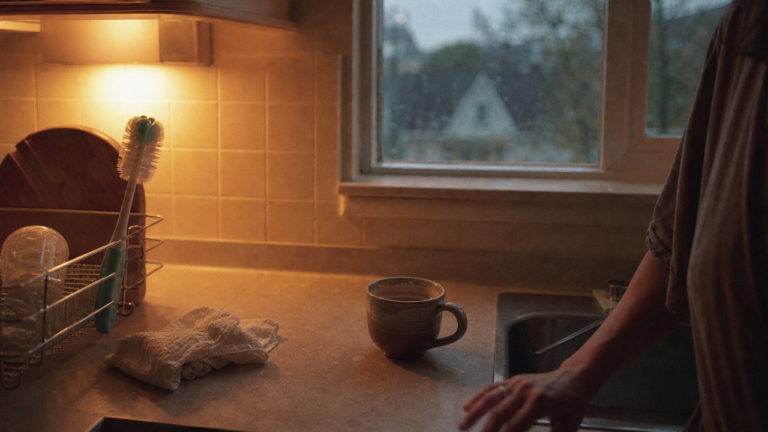
Think about the last time you actually felt it — that bottom-dropping-out sensation of being all the way safe. Not on a beach in a brochure. Somewhere ordinary. A kitchen on a slow Sunday with no plan, the smell of something cooking, a voice in the next room you don’t have to answer. Your shoulders come down a centimetre you didn’t know they were holding. Your breath finds its own floor. You weren’t trying to relax. You forgot to. The conditions did the work, and your body simply concluded, on its own, that for the next hour nothing was required of it. That feeling is not a mood. It’s a message, and the body is the one writing it.
To understand why this matters for conception, it helps to remember what a body actually is. Not a machine with a broken part. A living thing shaped over a very long time to do one job above all others: keep you alive long enough, and in good enough conditions, to be worth the enormous cost of making someone new.
Building a pregnancy is the most expensive thing a body can undertake. Months of energy, blood, minerals, hormones, sleep, and reserve, with no guarantee and no quick exit. Evolution did not design a system that pours that investment into a body it believes is under threat. So it built a switch. When the environment reads as dangerous — when there isn’t enough food, when the nights are broken, when the world feels like something to be braced against — the body quietly moves reproduction to the bottom of the list. Not off the list. To the bottom. Survival first. Everything else can wait until the conditions improve.

This is the part worth sitting with. A body that struggles to conceive under stress is not malfunctioning. It is doing exactly what it was built to do. Reproduction is the first thing a threatened body sets down and the last thing it picks back up. That isn’t a flaw in the design. It is the design.
The trouble is that the system was tuned for a world of real, physical, time-limited danger. A predator. A famine. A hard winter that ends. It was not tuned for the particular shape of modern threat, which doesn’t arrive and then leave. It hums. It’s the inbox that never empties, the low-grade financial worry, the relationship running on logistics instead of warmth, the two alarms before sunrise. None of it is life-threatening on its own. All of it, stacked and continuous, reads to an old nervous system like a season that won’t turn. And so the switch stays where it is.
Then there is the cruelest twist, the one specific to people who are trying. The very act of trying — the way our culture teaches us to do it — can become its own steady threat signal. Consider what a determined month looks like. The tracking. The temperature taken before your feet touch the floor. The apps, the strips, the windows, the scheduled intimacy, the two-week wait spent reading your own body like a verdict you’re afraid of. Every one of those acts is a small message to your nervous system that something is wrong and must be monitored. Vigilance is the language of threat. You can spend two years treating your own body as a problem to be solved, and the body, listening, concludes that it is one.
This is why “just relax” lands so badly, beyond the fact that it’s annoying. It asks you to apply willpower to a system that doesn’t take orders. You cannot decide to feel safe the way you decide to sit up straight. Safety is bottom-up. It’s assembled from cues your body reads below the level of thought — the rhythm of your days, the quality of your sleep, the temperature of the room, whether the person beside you feels like a teammate or another thing to manage. You don’t argue your way into it. You build the conditions, and the body draws its own conclusion in its own time.

That last cue is worth pausing on, because it’s the one most often left out. If you have a partner, your nervous system is not reading your environment alone. It’s reading theirs too. Two people deep in the same long effort can drift into a quiet, exhausting pattern without either of them choosing it — intimacy moved onto a calendar, conversations narrowing to logistics and dates and what the app said this morning, a closeness that has slowly become another item on the list. The body registers all of it. Touch that arrives with an agenda doesn’t read the same as touch that arrives for no reason. A partner who feels like a co-conspirator in a shared, warm life sends a different signal than a partner who has become, without anyone meaning it to happen, one more source of pressure. None of this is anyone’s fault. It’s just what sustained effort does to two tired people. But it’s information the body uses, and it counts more than the candle.
So the more useful question is not how do I relax. It’s quieter and harder. What is my body still bracing against — and is that thing even true anymore?
Often the answer surprises people. The body braces against a threat that has already passed, or one that lives only in anticipation. It braces against a loss it’s protecting you from before it happens. It braces out of an old habit of vigilance that started long before you ever thought about a baby. Some of what it’s guarding against is real and worth addressing honestly. Some of it is a ghost the body hasn’t been told has left the building. You can’t always tell which is which from inside the bracing. But you can start to listen for it, instead of overriding it.
And then — gently, without turning it into one more project — you can start changing what your body reads. Not by adding a tenth practice to an already crowded day, but by removing the signals of alarm where you can find them. Predictable rhythms tell the body the season is stable. Warmth, real warmth, the kind you feel in your hands and your belly, reads as safe in a way no concept does. Sleep that isn’t constantly interrupted does more for conception than most things sold for it. Touch that isn’t on a schedule, that isn’t aimed at an outcome, reminds the body that closeness and pressure are not the same thing. A genuine day off from the entire enterprise — no tracking, no checking, no optimizing — is not laziness. It’s information. It tells the body the watch has been called off.
It helps to be concrete about what changing the signal actually looks like, because it’s smaller and less impressive than the wellness industry would like it to be. It looks like going to bed at a similar time most nights, so the body stops bracing for a broken one. It looks like eating enough, regularly, warm food rather than whatever was fast — because a body counting calories or running on coffee and adrenaline is a body that reads scarcity, and scarcity is not the season for building. It looks like one untracked day a week where the project is set down entirely. It looks like letting yourself be held without it leading anywhere. It looks like noticing, the next time someone offers the relax line, that you don’t owe them a polite smile. None of these are interventions. They are just the steady removal of alarm, repeated until the body starts to believe it.
None of this is fast, and you should be suspicious of anyone who promises it will be. The nervous system updates the way trust updates: slowly, through repeated evidence, with setbacks. You cannot convince it in an afternoon that the coast is clear when it has spent years reading the opposite. But it does update. It is built to. The same intelligence that moved reproduction to the bottom of the list will move it back up, on its own, the moment it believes the conditions can hold it.
That belief is the whole task. Not relaxation. Not a perfect protocol. Not trying harder, which is usually the opposite of what’s needed. The work, if it can even be called work, is to stop sending the alarm — and to let a body that has been bracing for a long time slowly find out that it’s allowed to stand down.
Because the body that braces isn’t broken. It’s loyal. It’s doing the oldest job it has, holding the line, waiting for better conditions, refusing to invest in a future until it’s reasonably sure the present can be survived. You don’t have to fight it. You have to convince it — patiently, honestly, with evidence rather than effort — that the conditions are better than it fears. That the threat it’s still guarding against has, in fact, passed. That it can finally, safely, say yes.
Fertile Again! picks this exact question up in more depth, built around the body's own timing rather than a countdown.