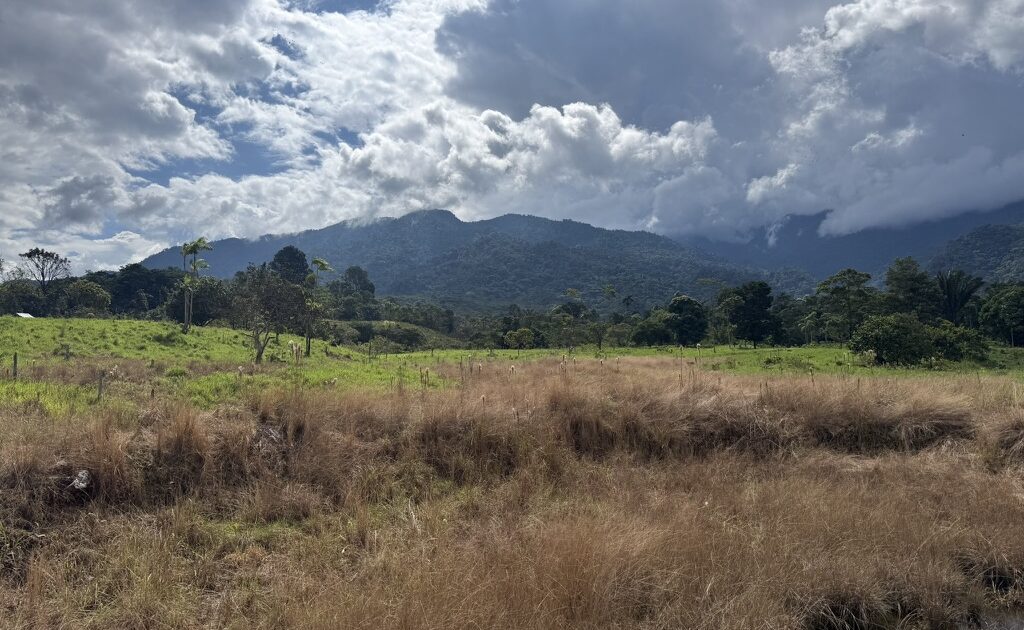
One guest wanted to leave the moment they arrived. It was 2018, a general wellness retreat we called Reset and Recharge, in a jungle community that runs off-grid: solar panels for the electricity, no windows, only mosquito netting between you and everything that lives out there. This guest hated bugs. Hated the heat, the mosquitoes, the whole arrangement. The sentence was "I'm not doing this," more or less, and it came with a bag that hadn't been unpacked.
I asked for one night. Just one.
I've thought about that night a lot since forest bathing became something people book on their phones, because the research on forest bathing and what happened in that hut by morning tell two slightly different stories. The studies say the forest calms you down. My guest would have told you the forest did the opposite, at least for the first twelve hours. Both are true, and the gap between them is the useful part.
Where forest bathing actually comes from
The word is newer than it sounds. Shinrin-yoku, "taking in the forest atmosphere", was coined by the Japanese Ministry of Agriculture, Forestry and Fisheries in 1982, according to the review by Park and colleagues. A ministry named it. That doesn't make it fake, but it does tell you forest bathing started life as a public-health and forestry idea, and the science arrived afterwards to check it.
The practice itself is plain. You go into a forest, slowly, and you stay there. No summit, no step count, no heart-rate zone. In the Japanese programmes people walk a little, sit a little, and look.
What the 24 forests measured
Park's team ran field experiments in 24 forests across Japan in 2005 and 2006. Twelve subjects per site, 280 in total, all of them male university students around 22 years old. Half went to a forest on the first day and a city on the second; the other half did it the other way round. They walked for about 16 minutes and then sat looking at the view for about 14.
In the forest, salivary cortisol was lower, pulse was lower, blood pressure was lower, and heart rate variability showed more activity on the parasympathetic side, the rest-and-digest half of the nervous system. Thirty minutes. That's the headline result of forest bathing research, and it holds up as a measurement.
The immune study everyone quotes
The other forest bathing study you'll meet on every wellness page is Qing Li's work on natural killer cells, the immune cells that go after infected and abnormal cells. In Li's 2010 review of his own trials, people who spent three days and two nights in forest areas showed higher NK activity on the forest days than on a normal working day, and the rise was still there more than 30 days later. A tourist trip to a city didn't do the same.
Hold on to the numbers, though. The trials behind that review had 12 men, then 12 men again, then 13 nurses. Each person was compared with their own working day, with no sham trip and no random assignment. At the time, the review says, there were no other published reports on the subject apart from these. A finding that interesting, from groups that small, with no outside replication yet, is a reason to stay curious. It isn't a reason to write forest bathing into anyone's cancer care, which some of the pages quoting it come close to doing.
The modern-life version of forest bathing: 120 minutes a week
Most people reading this don't live near a Japanese cedar forest, or a jungle. They live near a park, maybe a river path, maybe a cemetery with old trees. So the most useful study for everyday forest bathing may be one that never uses the phrase.
White and colleagues looked at 19,806 people in England's national survey on time spent in nature. Compared with people who'd had no nature contact in the past week, those with at least 120 minutes were more likely to report good health (an odds ratio of 1.59 at 120 to 179 minutes) and high wellbeing (1.23). The gain levelled off somewhere between 200 and 300 minutes. And it didn't matter how the two hours were collected: one long walk or several short ones gave the same picture.
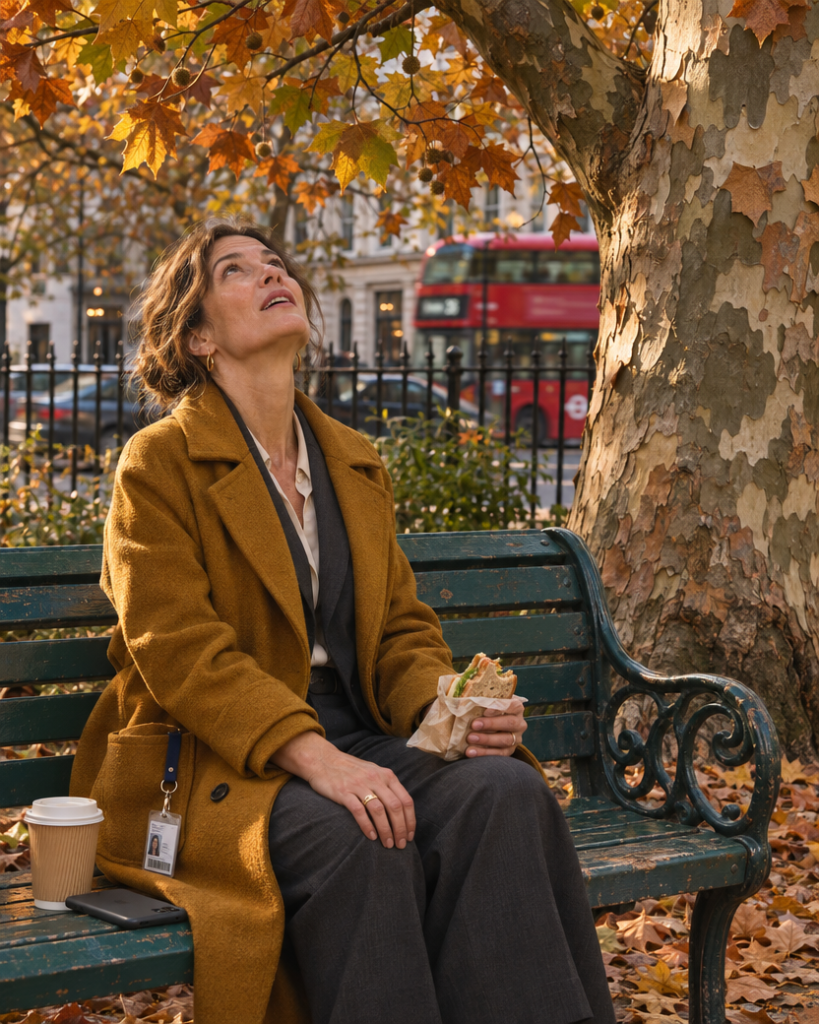
That's the most practical number in this whole field. Two hours, spread however your week allows. A lunch break under trees counts. So does the long way home through the park.
It's also a survey. People reported their own time outdoors and their own health, at one point in time. Healthier, happier people might simply go outside more. The authors say as much, and they name longitudinal and intervention studies as the step that's still missing.
Now the part that argues the other way
Read enough forest bathing research and you start to notice who gets studied and how. Wen and colleagues reviewed 28 studies published between 2015 and 2019. The randomised trials scored clearly higher on quality than the non-randomised ones, and the authors closed by asking future forest bathing studies to cut their risk of bias. Their summary of the benefits is warm. Their verdict on the methods is cooler.
And look at the samples above again. Young male students in one study. Office workers and nurses from Tokyo in another. People who agreed to go on a forest trip, in Japan, in a country that already thinks well of forests. Nobody in those studies was dragged there.
Park's paper also says plainly that no field-experiment evidence was yet available from other natural environments. A Japanese forest on a mild day is one environment. A tropical jungle in the wet season, with insects in your ears and no glass between you and the night, is a different one, and most of what gets said about forest bathing quietly assumes the first.
The forest bathing group was calmer before the walk
The detail I keep coming back to comes from Antonelli's 2019 meta-analysis on cortisol. The team screened 971 articles, kept 22, and pooled 8. Salivary cortisol was lower in the forest groups than in the city groups after the intervention. It was also lower before it. The people who knew they were about to go into the woods were already less stressed than the people heading into the city, before anyone had taken a step.
The authors wrote that anticipated placebo effects can play an important role. I'd say it more simply. Part of what forest bathing measures is the relief of knowing you're going somewhere you like.
That cuts both ways. If expectation does part of the work, then a reluctant person, someone who hates insects and heat and the lack of walls, may get none of the measured benefit on day one. They may get the reverse. Nobody has run a forest bathing trial on my guest.
The night someone wanted to leave
Here's what I've seen running retreats in the tropics. Two kinds of people arrive in the jungle. Some walk in and their shoulders drop. Others walk in and every alarm goes off at once: the noise, the insects, the netting where a window should be.
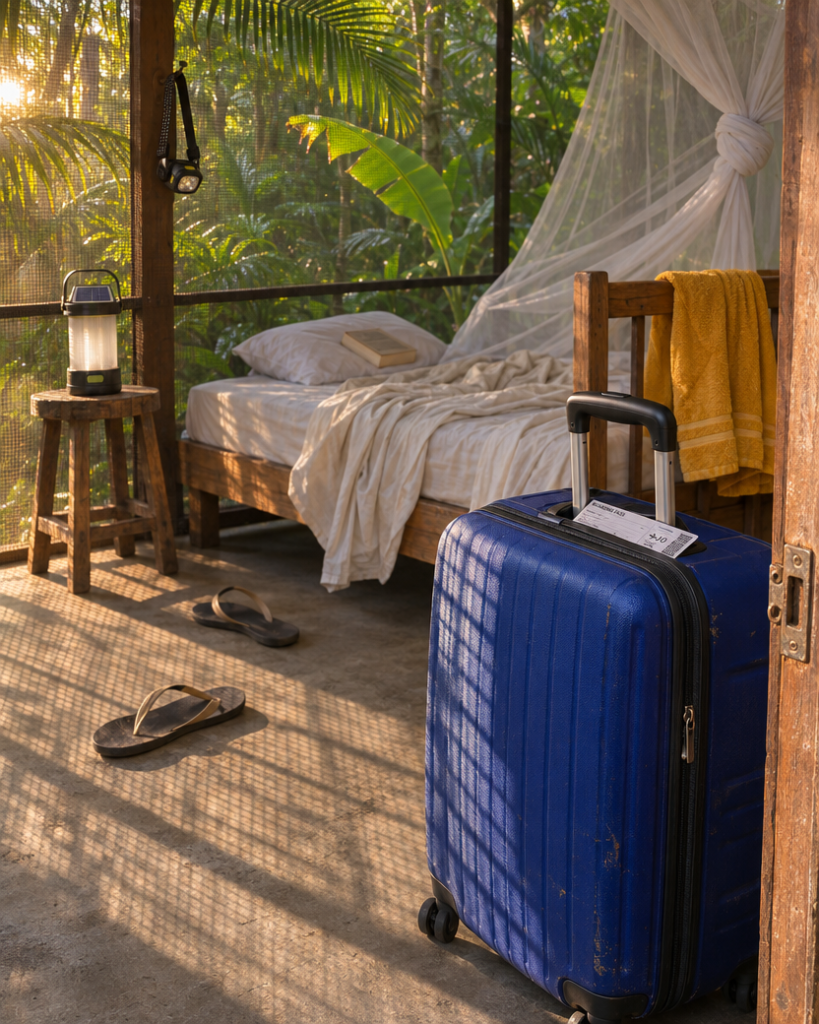
It's the same feeling as landing in the Caribbean after sixteen hours of flights and transfers, opening the hotel room door and finding worn furniture, a smell, maybe a cockroach. The first thought is: I'm not staying here.
So the whole job on the first night is to get the person to stay that one night. In Hungarian we have a phrase for it, roughly "let's sleep on it once more, we'll see tomorrow." If they stay, they get up in the morning and look at the same place with different eyes. They can take it in now. It's the place they paid for, the place they wanted to come to, and suddenly they can see it.
My guest stayed. I'm not going to invent a dramatic sunrise for you. What I can tell you is the pattern I've watched over and over: the people who get through the first night wake up and look at the same place differently, and whatever changed, it didn't come from me.
The ant trail
What people take home from the jungle is something I don't give them. The forest gives it. Nature keeps its own rhythm whether you do anything or not. Throw yourself on the ground and have a tantrum, and it carries on exactly the same. The creatures out there aren't there to eat you. They're doing their job.
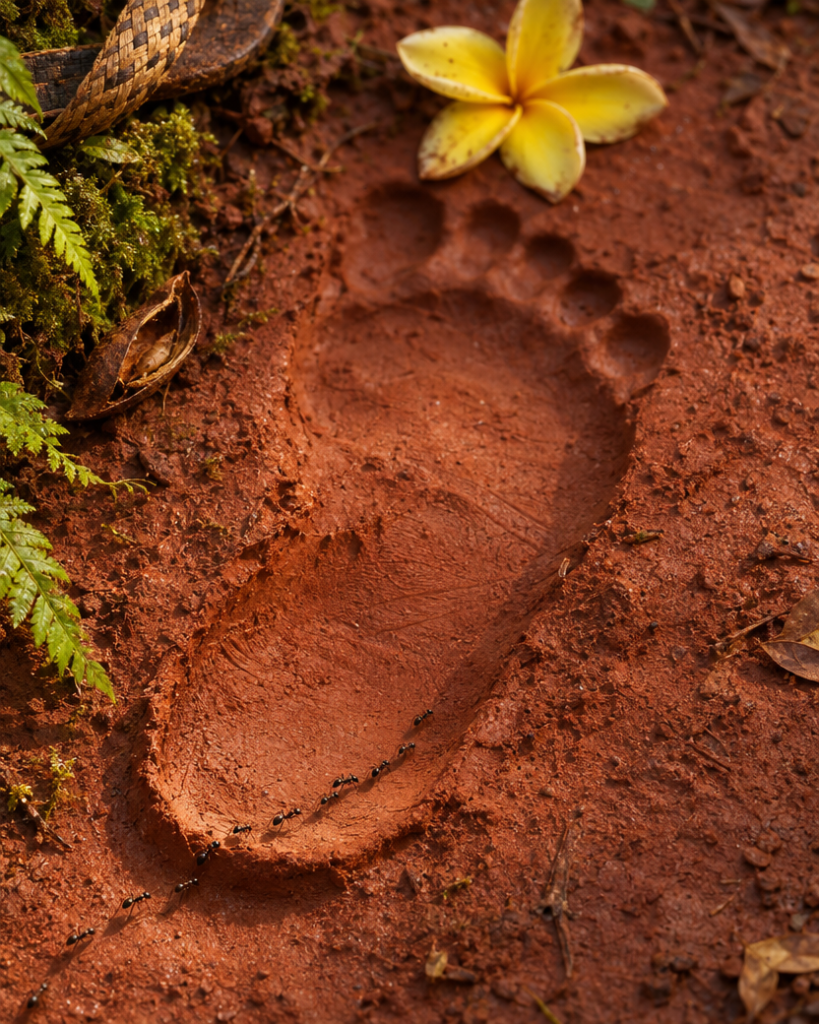
Sit down in the middle of an ant trail and they'll bite you, sting you, maybe try to eat you, because that's their work. Nothing personal.
I think that's the lesson underneath forest bathing, and it's one the cortisol studies can't measure. The forest doesn't need you to relax. It doesn't adjust to you. People get better, when they do, because they start fitting themselves back into a rhythm that was running long before they arrived. It isn't the forest that heals you, and it isn't the shaman. You do that yourself, once you find your balance with nature again.
I wrote about a similar moment, lying on the earth after the heat of the sweat lodge, in grounding meditation, and about what happens when people fly home in retreat integration. The jungle's first night is the same problem from the other end.
How to try forest bathing this week
You don't need a jungle, a guide or a certificate. This is what the evidence and the jungle suggest together:
- Aim for 120 minutes a week outside, in pieces if that's what your week allows. In the White data the split made no difference.
- Copy the Japanese protocol: about 15 minutes walking slowly, then about 15 minutes sitting and looking. That's the dose behind the 24-forest results.
- Put the phone on silent and leave it in a pocket. Forest bathing is about where your attention goes, and a screen pulls it straight back into your hand.
- If you can't sit still, keep moving. Walking meditation works fine under trees.
- If the city is loud where you are, don't wait for it to go quiet. The same practice for meditating in a noisy city works on a park bench with traffic behind you.
- Expect the first time to feel ordinary, or even irritating. Use the one-more-night rule: judge forest bathing on your third visit, not your first.
One more thing from the jungle side. Pick one spot and go back to it. The first visit, you see the place. By the third or fourth, you start to see what lives there: which branch the birds use, where the ants cross, what time the light reaches the bench. That's when forest bathing stops being an outing and turns into a relationship with somewhere.
Forest bathing for people who hate the outdoors
If you're the guest with the unpacked bag, start smaller. A park with paths, daylight and a bench. Cool hours, not midday. Long trousers where there are ticks. What forest bathing gives you is contact with a place that keeps going without you, and a well-kept park can give you that without ten thousand insects.
When forest bathing isn't the answer
Forest bathing is a good habit. It isn't treatment. If low mood, anxiety or poor sleep has lasted more than two weeks and is getting in the way of work, eating or the people you live with, see your doctor, and keep going outside alongside that, not instead of it. If anxiety gets louder when you slow down, that's a known pattern and worth telling someone about rather than pushing through alone. If you have heart or lung problems, heat and humidity are a real risk: pick a cool day and a short path.
The forest will be there either way. That's more or less the point.
References
Antonelli M, Barbieri G, Donelli D. (2019). Effects of forest bathing (shinrin-yoku) on levels of cortisol as a stress biomarker: a systematic review and meta-analysis. International Journal of Biometeorology, 63(8), 1117–1134. https://doi.org/10.1007/s00484-019-01717-x
Li Q. (2010). Effect of forest bathing trips on human immune function. Environmental Health and Preventive Medicine, 15(1), 9–17. https://doi.org/10.1007/s12199-008-0068-3
Park BJ, Tsunetsugu Y, Kasetani T, Kagawa T, Miyazaki Y. (2010). The physiological effects of Shinrin-yoku (taking in the forest atmosphere or forest bathing): evidence from field experiments in 24 forests across Japan. Environmental Health and Preventive Medicine, 15(1), 18–26. https://doi.org/10.1007/s12199-009-0086-9
Wen Y, Yan Q, Pan Y, Gu X, Liu Y. (2019). Medical empirical research on forest bathing (Shinrin-yoku): a systematic review. Environmental Health and Preventive Medicine, 24, 70. https://doi.org/10.1186/s12199-019-0822-8
White MP, Alcock I, Grellier J, Wheeler BW, Hartig T, Warber SL, Bone A, Depledge MH, Fleming LE. (2019). Spending at least 120 minutes a week in nature is associated with good health and wellbeing. Scientific Reports, 9, 7730. https://doi.org/10.1038/s41598-019-44097-3