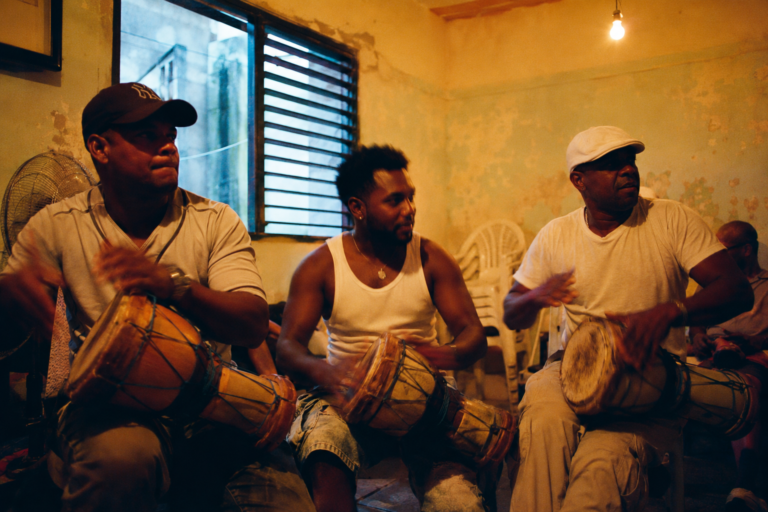
The question about alcohol and fertility tends to show up in December, usually with a glass already in somebody's hand. A relative leans over with the bottle. You've been trying for seven months. You put your palm flat over the glass, or you don't, and either way you spend the next hour doing arithmetic in your head that nobody else at the table can see.
I'm not a doctor, and none of this is medical advice. What I can do is read the studies the rules come from, the whole of each one, and tell you what they measured. On alcohol and fertility, the picture is messier than either side of that table wants. It's lighter than the clinic poster suggests when it comes to getting pregnant. It's heavier than the party suggests for the man in the couple. And the part that matters most sits in the two weeks when you don't yet know.
There's also a reason the glass is in your hand in the first place, and the research that ties alcohol and fertility to the nervous system is the part I find most interesting. I'll get there.
What the biggest study on alcohol and fertility found
The cleanest data on alcohol and fertility in women comes from Denmark. Mikkelsen and colleagues followed 6,120 women aged 21 to 45, all in a stable relationship with a male partner, all trying to conceive and none in fertility treatment, for up to twelve cycles between 2007 and 2016. They reported what they drank in plain units: a 330 ml beer, a 120 ml glass of wine, 20 ml of spirits.
69% got pregnant during follow-up. The median intake was two drinks a week. Compared with women who didn't drink at all, the chance of conceiving per cycle barely moved: 0.97 for one to three drinks a week, 1.01 for four to seven, 1.01 for eight to thirteen. Only at fourteen or more did the number fall, to 0.82, and the confidence interval on that one ran from 0.60 to 1.12, wide enough to include no effect at all. For alcohol and fertility in the everyday sense, a couple trying at home, that's close to no change.
The authors' own conclusion: under fourteen servings a week "seemed to have no discernible effect on fertility." They also wrote down what they couldn't see about alcohol and fertility. The questionnaire didn't separate steady drinking from binges, and a big night that lands in the fertile window might behave differently from a glass with dinner.
The meta-analysis on alcohol and fertility that pulls the other way
One cohort, however large, is one country. Fan and colleagues pooled 19 observational studies covering 98,657 women. Drinkers overall had a fecundability ratio of 0.87 against non-drinkers. Light drinkers, up to 12.5 grams of ethanol a day, came in at 0.89. Moderate to heavy drinkers, above that, at 0.77. Their dose-response line put it at roughly 2% lower fecundability for every extra 12.5 grams a day, which is a little under one American standard drink.
Wine, beer and spirits taken separately didn't clearly differ from no alcohol. So the pooled picture of alcohol and fertility is a small, real dent that deepens with dose, and most of the dent lives at the daily end. Every study in that pool is observational. Nobody randomised women to drink.
Alcohol and fertility in IVF: the four-drink line
IVF lets researchers watch every step, so it's where alcohol and fertility data gets sharper. Rossi and colleagues asked 2,545 couples about their drinking before a first IVF cycle and followed them through 4,729 cycles. 41% of the women and 58% of the men drank one to six drinks a week.
Women who drank four or more a week had 16% lower odds of a live birth than women under four. When both partners drank four or more a week, the odds were 21% lower than when both stayed under four. Four drinks is a Friday and a Saturday. It's not a drinking problem by anyone's definition, which is exactly why the number stuck with me.
Notice the second figure. It's a couple's number, and most advice on alcohol and fertility is written as if only one person at the table drinks. Which brings me to the half of the conversation that usually gets skipped.
The man's glass: alcohol and fertility on his side of the bed
Most of what gets written about alcohol and fertility is written to women. The research doesn't support that split. Jensen and colleagues tested 1,221 young Danish men aged 18 to 28, recruited at the compulsory military fitness exam between 2008 and 2012. Sperm concentration, total count and the share of normally shaped sperm all fell as habitual drinking rose. The drop showed from five units in a typical week and was strongest above 25. Men drinking more than 40 units a week had 33% lower sperm concentration than men drinking one to five.
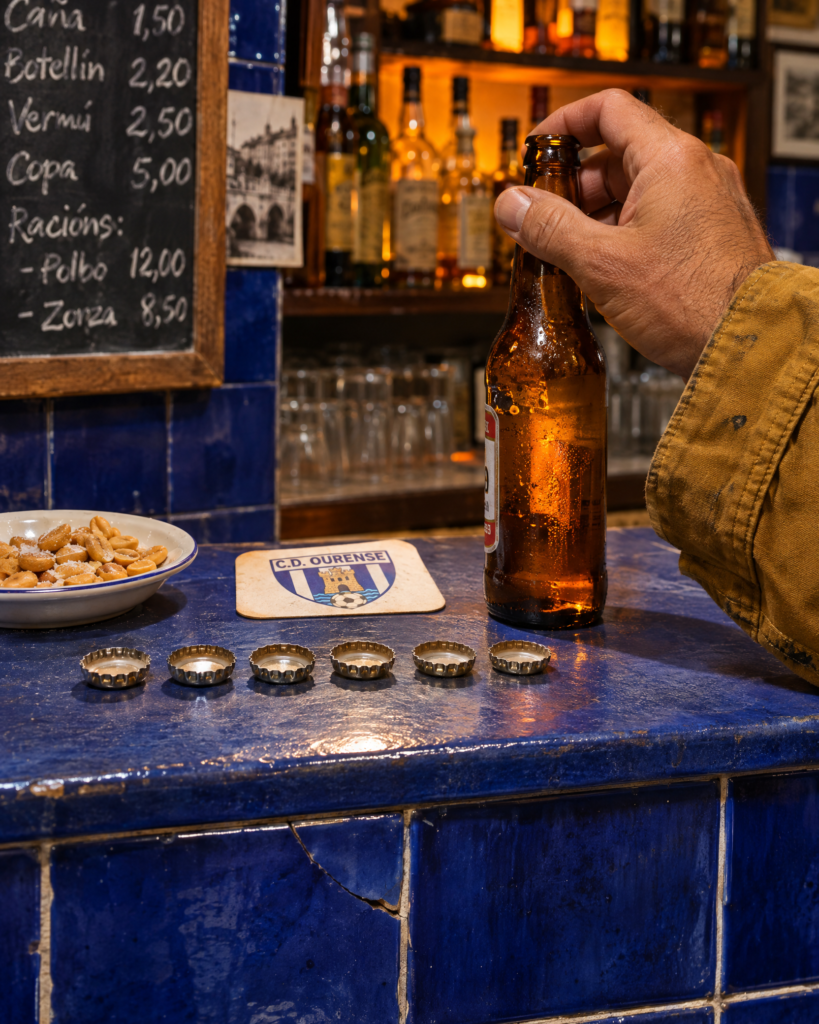
One detail about alcohol and fertility in men surprised me. Binge drinking in the past month, more than five units in a day, wasn't independently linked to semen quality. The steady habit carried the signal.
Ricci and colleagues pooled 15 cross-sectional studies with 16,395 men and found alcohol linked to lower semen volume and fewer normally shaped sperm. Then they added the line I'd want every couple to read: the gap was much clearer between occasional and daily drinkers than between never and occasional, "suggesting a moderate consumption did not adversely affect semen parameters." It's a sentence about alcohol and fertility you'll rarely see quoted.
Why his December shows up in February
Sperm take roughly three months to form, which I went through in the piece on the 90-day sperm cycle. So the sperm that meet an egg in late February started their run around the office party. If he's been told the only question is whether she's drinking, he's been told half the story, the same half I wrote about in male infertility. Alcohol and fertility is a two-person subject.
What alcohol does to a nervous system that's bracing
In Havana in the mid-2000s, the scheduled power cuts could run eight or ten hours. People got through them differently. Some neighbours drank. Some went next door and talked. I've thought about that split a lot since, because it's the same split I see in couples who've been trying for a long time.
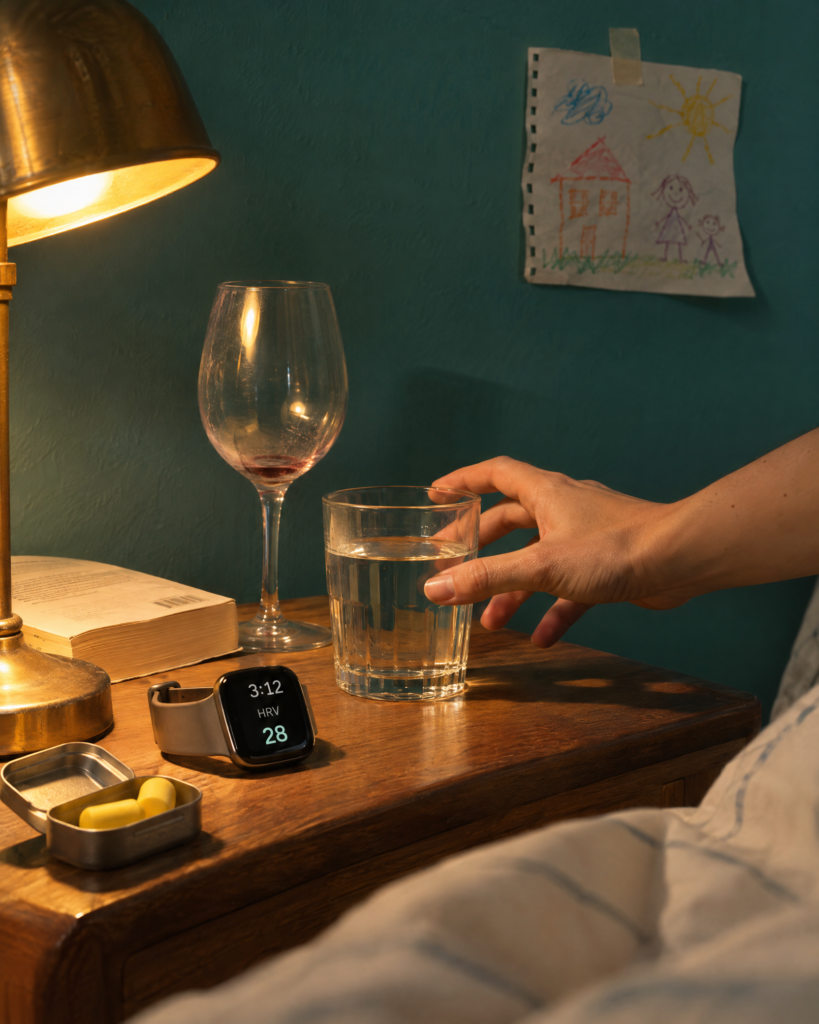
A drink works. That's the uncomfortable part of the alcohol and fertility story. Alcohol takes the edge off a braced body for an hour or two, and when you've spent a year inside the stress of trying to conceive, an hour off is not nothing.
Then the bill arrives. Pietilä and colleagues had 4,098 Finnish employees wear beat-to-beat heart monitors through ordinary life and log their drinks, then compared each person's nights with and without alcohol. Drinking pushed the body toward sympathetic, fight-or-flight regulation during the first three hours of sleep and pulled parasympathetic recovery down. The recovery index dropped by 9.3, 24.0 and 39.2 percentage points for low, moderate and high doses. Even the low dose, up to 0.25 grams per kilo, about a drink and a bit for most adults, showed it.
Lab sleep studies tell the same story from another angle. Ebrahim and colleagues reviewed every study they could find on alcohol and sleep in healthy volunteers: you fall asleep faster, the first half of the night is deeper, and the second half breaks up. REM sleep arrives late. So the drink buys you the evening and hands you back 3 a.m., which is the hour I covered in sleep and fertility.
This is the link between alcohol and fertility that the advice leaflets never draw. The glass doesn't only carry ethanol into the body. It's often the only off-switch someone has found, and taking it away without replacing it leaves the switch missing.
The six days that were hardest to hold
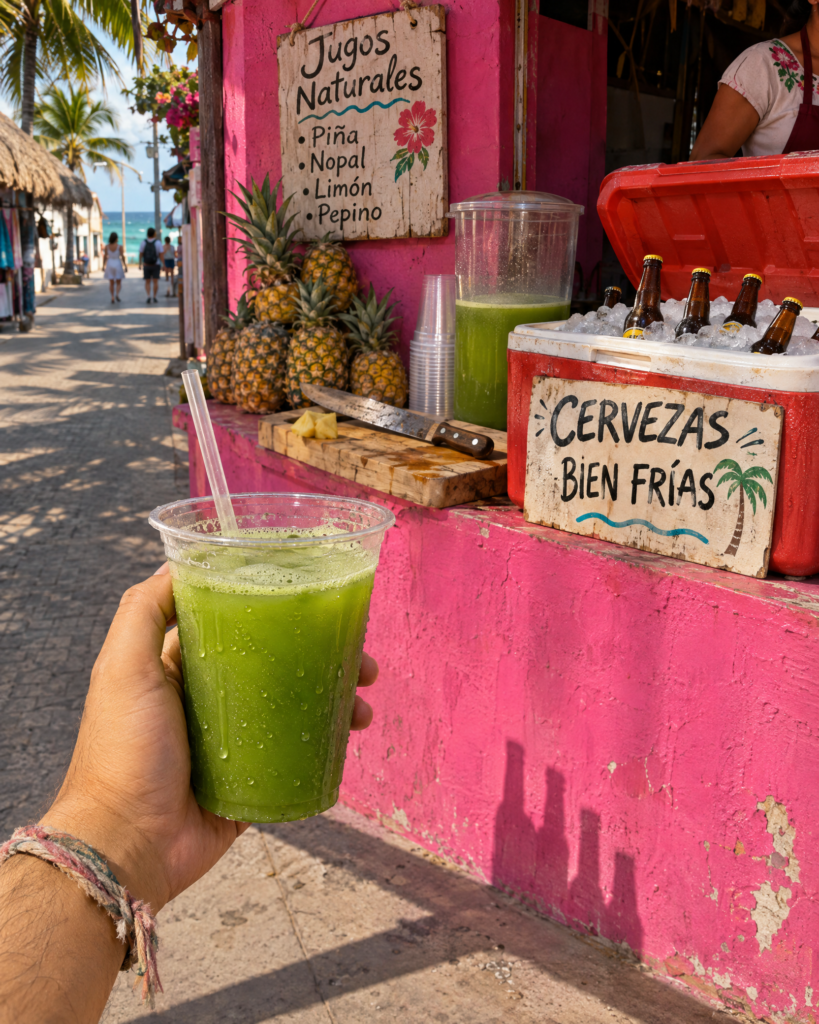
Years ago we ran a juice-fasting retreat in Playa del Carmen. People signed up for six days of juice. They didn't think through how long six days is. Playa doesn't help. Food and drink are sold on every corner, and there was a guest who simply couldn't hold it.
Plenty of people arrive with a drinking problem, too, and keeping someone off alcohol for six days is harder than keeping them off food. That's what I saw. It taught me that a rule which depends on willpower, in a town built for the opposite, breaks around day three. The people who made it through had swapped something in, rather than just taken something out.
I think of that every time I see advice on alcohol and fertility that says "just stop drinking while you're trying" as if it were a single, easy step.
Now the part that argues the other way
Some of the data on alcohol and fertility points in the direction nobody puts on a poster. Ricci's 2018 clinic study looked at 323 men in Italian couples heading for assisted reproduction. Men drinking four to seven units a week had higher semen volume (median 3.0 ml against 2.4) and higher total sperm count (87.9 million against 51.5) than men drinking under three, and sperm concentration traced a U-shape. The authors concluded that moderate intake "appears positively associated" with semen quality.
I wouldn't pour a glass on the strength of that. Men who drink a few glasses a week with friends may simply be healthier and more social than both the abstainers and the heavy drinkers, and that's the trouble with every study on alcohol and fertility in this piece. They're observational. People report their own drinking, and people under-report. Drinkers differ from non-drinkers in a dozen ways a questionnaire can't capture.
Put Mikkelsen and the Ricci review next to that, and the honest reading of alcohol and fertility is this: for the odds of conceiving, a few drinks a week hasn't shown a clear effect on either side. The "not a single drop" rule isn't what the conception data says.
Where the case for stopping actually sits
It sits after ovulation, which is where alcohol and fertility stops being the question and alcohol in pregnancy starts. Sundermann and colleagues pooled 24 studies with 231,808 pregnant women. Any alcohol in pregnancy carried 19% higher odds of miscarriage, and below five drinks a week, each extra weekly drink added about 6%. The authors are frank that the studies struggle to recruit women early enough and to measure drinking accurately.
Here's why that matters while you're trying. You can't know you're pregnant for roughly two weeks after ovulation, and that's the two-week wait in which the Christmas glass usually gets poured. If you've had losses before, the recurrent miscarriage piece is the one to read next.
What I'd do with the alcohol and fertility evidence
This isn't a protocol. It's how I'd read the alcohol and fertility numbers if it were my house in December:
- Split the cycle in two. Before ovulation, the conception data on a few drinks a week is close to neutral. After ovulation, until a period or a negative test, is where I'd stop.
- Count both glasses. Rossi's 21% was a couple's figure, and the semen studies say his weekly habit is the one that registers.
- Watch the daily line. Fan, Ricci and Jensen all find the clearer alcohol and fertility signal where drinking becomes daily or close to it, more than with the occasional glass.
- Notice 3 a.m. If you wake in the second half of the night after drinking, that's the recovery dip Pietilä measured, and it lands on a body that's already bracing.
- Replace the ritual instead of deleting it. Something cold, with weight and colour, in a real glass, at the same moment the wine used to arrive.
When alcohol and fertility turn into a different conversation
If two weeks without a drink feels impossible, or the glass is how you get through each negative test, that's worth saying out loud to a doctor, not working out on a blog. The same goes if one of you is drinking and the other has stopped and it's started to sit between you; I wrote about that kind of distance in infertility and relationships. And if you've been trying for a year under 35, or six months at 35 and over, it's time for a fertility specialist regardless of what's in the glass.
Back at the table
So, the palm over the glass. On the evidence about alcohol and fertility, a single refill before ovulation isn't what decides your year. A habit decides more, his as much as yours, and so does what the drink is doing for you that nothing else has been allowed to do.
If you take the glass away, give the evening something back. A walk after dinner, a longer exhale, ten minutes outside before the dishes. The body that's been bracing for months doesn't need another rule. It needs another way to put the weight down.
References
Mikkelsen, E. M., Riis, A. H., Wise, L. A., Hatch, E. E., Rothman, K. J., Cueto, H. T., & Sørensen, H. T. (2016). Alcohol consumption and fecundability: prospective Danish cohort study. BMJ, 354, i4262. https://doi.org/10.1136/bmj.i4262
Fan, D., Liu, L., Xia, Q., Wang, W., Wu, S., Tian, G., et al. (2017). Female alcohol consumption and fecundability: a systematic review and dose-response meta-analysis. Scientific Reports, 7(1), 13815. https://doi.org/10.1038/s41598-017-14261-8
Rossi, B. V., Berry, K. F., Hornstein, M. D., Cramer, D. W., Ehrlich, S., & Missmer, S. A. (2011). Effect of alcohol consumption on in vitro fertilization. Obstetrics & Gynecology, 117(1), 136–142. https://doi.org/10.1097/AOG.0b013e31820090e1
Jensen, T. K., Gottschau, M., Madsen, J. O., Andersson, A. M., Lassen, T. H., Skakkebæk, N. E., et al. (2014). Habitual alcohol consumption associated with reduced semen quality and changes in reproductive hormones; a cross-sectional study among 1221 young Danish men. BMJ Open, 4(9), e005462. https://doi.org/10.1136/bmjopen-2014-005462
Ricci, E., Al Beitawi, S., Cipriani, S., Candiani, M., Chiaffarino, F., Viganò, P., et al. (2017). Semen quality and alcohol intake: a systematic review and meta-analysis. Reproductive BioMedicine Online, 34(1), 38–47. https://doi.org/10.1016/j.rbmo.2016.09.012
Ricci, E., Noli, S., Ferrari, S., La Vecchia, I., Cipriani, S., De Cosmi, V., et al. (2018). Alcohol intake and semen variables: cross-sectional analysis of a prospective cohort study of men referring to an Italian Fertility Clinic. Andrology, 6(5), 690–696. https://doi.org/10.1111/andr.12521
Sundermann, A. C., Zhao, S., Young, C. L., Lam, L., Jones, S. H., Velez Edwards, D. R., & Hartmann, K. E. (2019). Alcohol use in pregnancy and miscarriage: a systematic review and meta-analysis. Alcoholism: Clinical and Experimental Research, 43(8), 1606–1616. https://doi.org/10.1111/acer.14124
Pietilä, J., Helander, E., Korhonen, I., Myllymäki, T., Kujala, U. M., & Lindholm, H. (2018). Acute effect of alcohol intake on cardiovascular autonomic regulation during the first hours of sleep in a large real-world sample of Finnish employees: observational study. JMIR Mental Health, 5(1), e23. https://doi.org/10.2196/mental.9519
Ebrahim, I. O., Shapiro, C. M., Williams, A. J., & Fenwick, P. B. (2013). Alcohol and sleep I: effects on normal sleep. Alcoholism: Clinical and Experimental Research, 37(4), 539–549. https://doi.org/10.1111/acer.12006