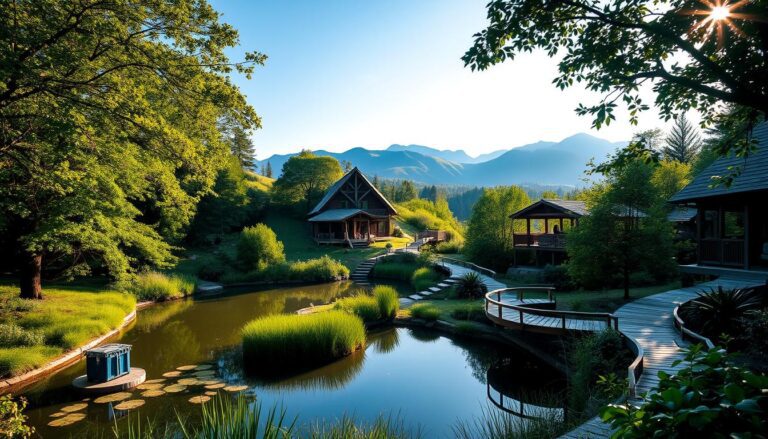
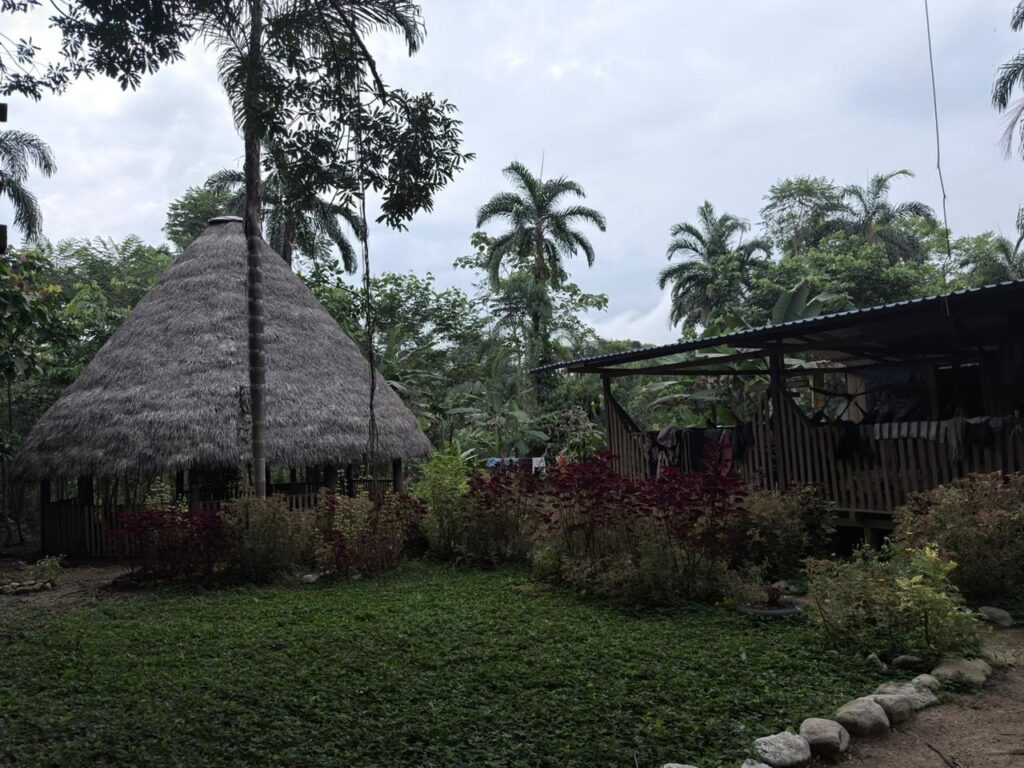
You reach the house after dark. It sits back from a dirt road in the Putumayo, in the low green country where Colombia stops being mountains and starts being Amazon, and the first thing you notice is that everyone is already quiet — not tense, just settled, the way people go still before a long night they’ve done before. This is where yagé is served. A wooden building with a plank floor, benches around the edge, a low fire or a single lamp throwing more shadow than light, and at the head of the room an old man the others call taita, which means father. You find a place on a bench. You wait. Whatever you thought you came here for, the night has its own plan, and it will not be asking your opinion.
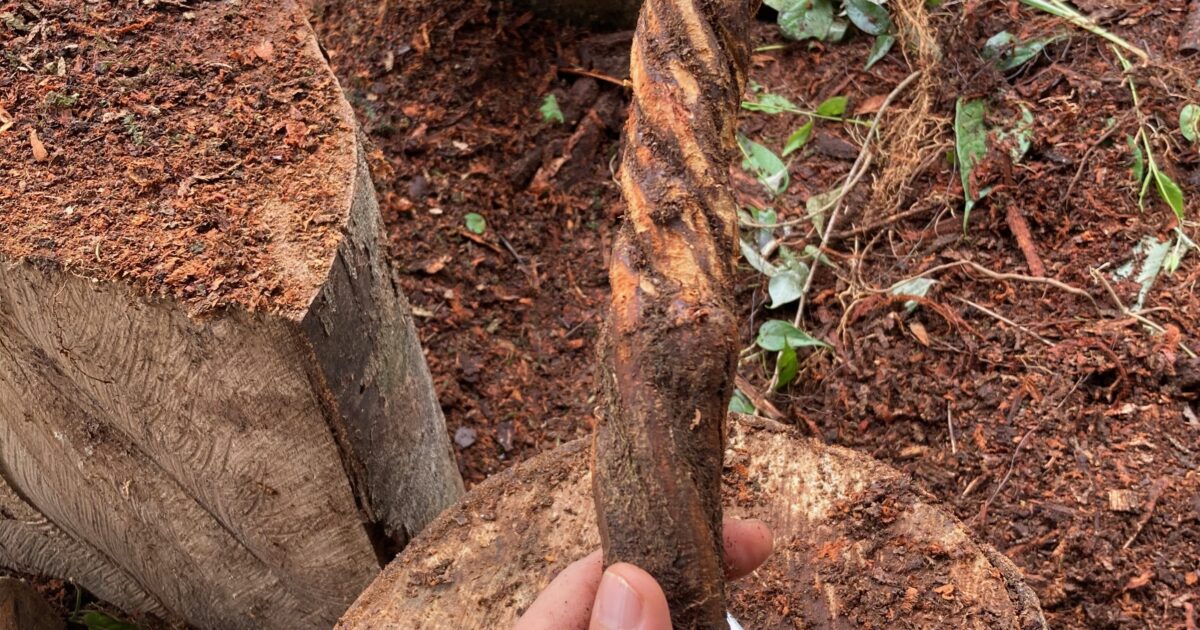
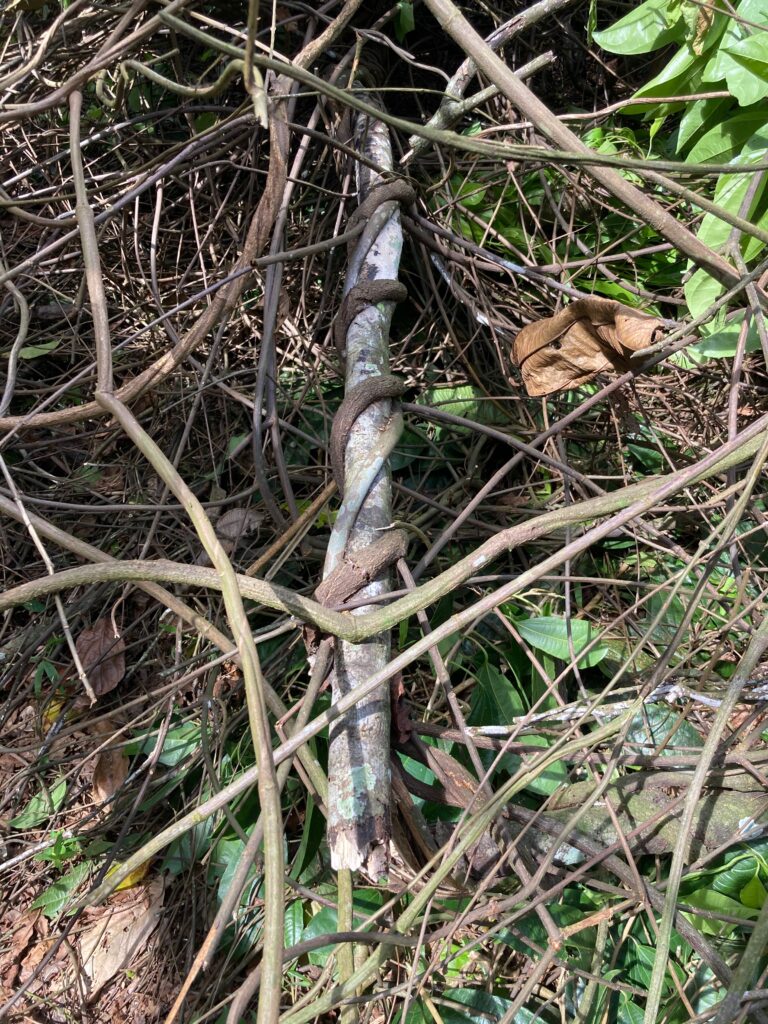
Yagé is the medicine at the center of it — a bitter brown brew the peoples of the Putumayo have taken for longer than anyone can date. The Cofán, the Inga, the Siona, the Kamëntsá each carry their own line of yagé, their own songs, their own way of holding the night. It’s a cousin of the ayahuasca people drink further south in Peru, made from the same jungle vine but a different leaf, and by most accounts stronger and more purging than its southern relative. I’m not going to walk you through the chemistry or sell you a night of it. That isn’t the field note. The field note is about the sound. Because the thing nobody warns you about a yagé ceremony is how much of it is music — and how completely that music turns out to be the point.
The wait for the yagé to come
The taita pours the yagé into a small cup and you drink it standing up, in turn, and it is as bitter as anything you will ever put in your mouth — earth and rot and something metallic under it, a taste the body reads as a warning long before the mind catches up. Then you sit back down, and you wait. For a long time nothing happens at all. This is the part no one describes, because there’s no drama in it: a room full of people on wooden benches, breathing, while the fire ticks and the jungle carries on outside, and the yagé takes its slow time deciding to arrive.
And it’s here, in the waiting, before a single vision or wave of nausea, that the taita begins to sing. Quietly at first. Almost to himself. He starts the sound before the medicine does anything, so that by the time the yagé does come on — and you’ll know the moment it does — the song is already running underneath the night like a current you can step into. That timing is not an accident. He has done this a thousand times. He knows the sound has to be there first.
Why a yagé ceremony heals out loud
Go reading about drinking the vine and you’ll find the same picture over and over: a dark room, long silence, hours of sitting in the black waiting for something to move. That’s the Peruvian tradition, and it’s real there — their ceremonies lean on darkness and quiet to do the work. The Putumayo runs the other way. A yagé night in Colombia is loud. The taita sings almost the whole way through. He chants, he whistles, he blows, he takes up a harmonica and plays it into the dark for what feels like hours, and none of it is background music. Where the southern tradition trusts silence, the Putumayo trusts the song. The sound isn’t there to set a mood. It’s the steering wheel.
That took me a while to understand, because I’d arrived with the Western idea baked in — that healing is a quiet, private business, that you go inward and shut the door and wait. The taita’s whole practice says the opposite. He fills the room with sound on purpose. And the sound has a job to do.
I’ve thought since about why the yagé tradition here landed on music while the one down south landed on silence, and I don’t think either got it wrong. Silence hands you back to yourself. Song keeps a hand on you while you go. The Putumayo, drinking a stronger and rougher yagé, chose the hand. Once you’ve sat through one of these nights, the choice stops looking like a style and starts looking like mercy.
The harmonica in the dark
There’s a moment, once the yagé has taken hold and the floor of the ordinary has dropped out from under everyone in the room, when the taita lifts a harmonica to his mouth. It’s a small cheap thing, the kind you’d find in any market stall for pocket change. In his hands it doesn’t sound cheap. The notes bend and stack and layer until they stop sounding like a harmonica at all and start sounding like the forest itself — bird calls, wind through leaves, something animal folded down into the reeds. He moves around the room while he plays. He leans close over people, aiming the sound at a body the way you’d aim a lamp into a dark corner.
The old players are known by their sound. In the Putumayo each taita has his own signature on the harmonica, his own way of breathing through the reeds, and the people who come back year after year can name a healer in the dark by nothing but how he plays. It’s a voice as much as a voice is. And here is the thing I keep circling back to, the thing that made me want to write any of this down. A harmonica is breath. You play it by pulling air in and pushing it out through a narrow channel until the air itself sings. It belongs to the same family as the wooden flute I’d heard weeks earlier at the edge of the forest — the oldest instruments there are, the ones made of nothing but a person breathing on purpose.
In the forest, one flute had taken a wall of night noise and reorganized it into something I could stand inside of. In the yagé house, the harmonica did the same thing to a night that had come apart inside me instead of around me. When the taita played, the chaos had a shape. When he stopped, it lost one. I have never felt the difference between those two states so plainly in my life.
The song you can’t remember and never lose
The songs themselves don’t behave like songs you know. The taita doesn’t compose them. The tradition says they arrive through the yagé — received, not written — and you can hear that in them. They wander. They double back on themselves. They seem to be following something the singer can see and you can’t. Try to hum one the next morning and you’ll come up with nothing; the melody refuses to stay. But the body keeps a different kind of record. Weeks later a scrap of that wandering line surfaces at an odd hour, not as a tune you could sing to anyone, but as the plain physical memory of having been carried by something steadier than you were.
That’s the strange arithmetic of a yagé night. You remember almost nothing you could say out loud, and everything your body lived through. The yagé takes your language and hands back the music instead. Weeks on, it’s still a trade I’d make again: I lost the words for that night and kept the song.
The leaf that moves the air
At some point in the yagé night the taita takes up a wayra — a fat bundle of dried leaves (Wayra)— and shakes it over you. It isn’t a rattle, exactly. It’s closer to weather. A dry, rushing hush, leaves striking leaves, sweeping the air a few inches above your skin. He works it around your head and down the length of your body, still chanting under his breath, and you feel it as much as you hear it — a small private wind he’s making with his two hands. The word itself means wind. That’s exactly what it is: someone conducting a little storm over you in the dark, moving whatever it is that needs moving.
None of these sounds is loud on its own. A cheap harmonica. A low chant. A handful of leaves. But strung end to end through a yagé night that long, they become the only architecture left in the room. You lose track of where the walls are, where your own edges are, which way is up. The song is the only structure that holds. The song is where the walls are.
When the song stops
There’s a stretch of a yagé night I won’t dress up for you. The yagé turns your stomach and your certainty inside out at the same time. It’s called purging for a reason, and the room fills with the sound of people going through exactly that. This is the part the brochures leave out. It is also, it turns out, the part where you finally understand what all the music has been for.
Because when the taita’s harmonica pauses — and it does pause, he’s an old man, he rests — the whole room drifts. You can feel it happen. The night gets wider and colder, and each person is suddenly alone inside it. Then he starts again. A few notes. That unmistakable breathing through the reeds. And the room gathers back toward the sound the way iron filings pull toward a magnet, all at once, without deciding to. It happens over and over through the night until you understand that the man isn’t performing anything. He’s steering. He’s reading the room by ear — the way the researchers who record the rainforest can tell a healthy stretch of jungle from a dying one just by how it sounds — and when he hears the night going bad in somebody, he turns the song toward them. The harmonica is a rope he keeps throwing out into the dark, over and over, for whoever is closest to going under.
What you carry back out
By the last hours the yagé loosens its grip, and the songs change with it. The taita’s playing slows and warms. The frantic edge goes out of it. He’s bringing everyone back the way a good driver brings a car down off a mountain, tapping the brake, not stamping it, and the harmonica that had been a rope thrown into a storm becomes something closer to a lullaby. Somewhere in there, without noticing, you sleep for an hour.
You walk out at first light wrung out and strangely clear, the way you feel on the far side of a fever that finally broke in the night. The road is still dirt. The forest is still loud. Nothing about the Putumayo has changed at all. What a yagé night changes is one small, stubborn piece of knowledge you didn’t own the day before: that a person can be held through the dark by nothing more than another person’s breath, shaped into a tune, aimed steadily and patiently at whoever needs it most.
I find myself thinking about it in ordinary places now. A hospital corridor. A hard phone call. The times when life pulls the floor out from under somebody standing right next to you and there is nothing useful left to say. The Putumayo has an old answer for that, older than any of the words we reach for. You don’t fix it. You don’t explain it. You make a steady sound, and you keep on making it, and you don’t stop until the light comes back into the room. The taita would call that medicine. After that night, I’ve stopped arguing with him.
• “Yagé: On the Quest for Spiritual Enlightenment in Colombia,” The Bogotá Post (Dec 6, 2017) — (Cofán taita Abuelo Avelino, from Putumayo, and his apprentice “play harmonica and chant to calm the energy, sometimes in unison and sometimes solo”; the taita uses a bundle of dry branches known as a wayra to cleanse energy while chanting).
• “Exploring Colombian artist Savan’s music inspired by Yagé medicine ceremonies,” Real World Records —
“What Is Yagé? Complete Guide + Differences to Ayahuasca,” (yagé is the Colombian Putumayo tradition of the Siona, Cofán, Coreguaje and Kamsá; uses chagropanga rather than the Peruvian chacruna, more concentrated and purgative; and the key contrast leaned on in the piece — Peruvian ceremonies take place in darkness with long stretches of silence, while Colombian ceremonies carry far more music).
This is the kind of practice at the center of Meditation for Cancer — for the days when composure isn't the goal.