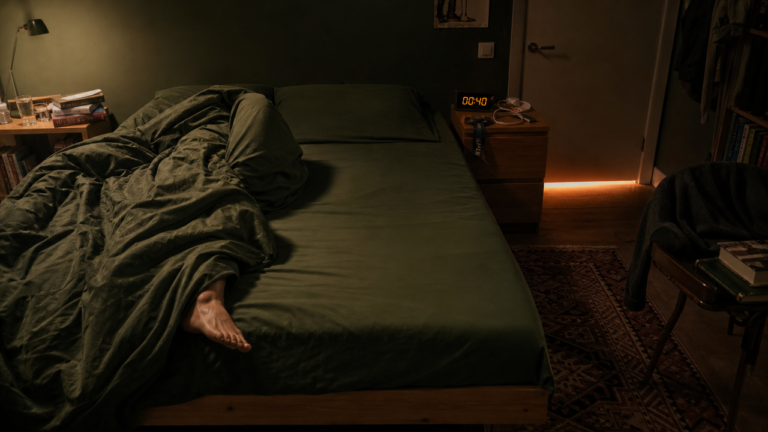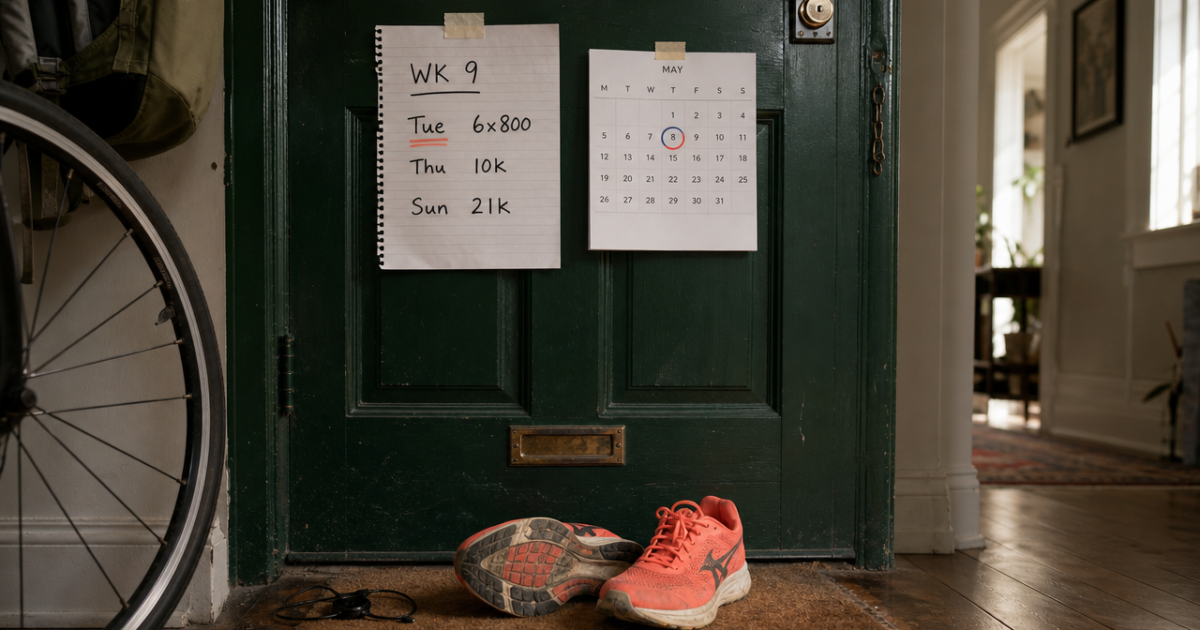
It's Saturday, ten past seven, and she's already done eleven kilometres. The plan taped to the fridge says intervals on Tuesday, long run on Sunday, and somewhere in between, ovulation, which the app thinks is Thursday. She's fitter than she has ever been. She took up running properly the month they started trying, because it felt like the one part of all this she could actually do something about.
That's how exercise and fertility usually meet in real homes. Either as a project (get fit, get ready) or as a warning somebody half-remembers from a forum: don't overdo it, you'll stop ovulating. Both versions get handed to her. Very little gets handed to him.
The research on exercise and fertility says something less tidy than either. Moving helps. Moving a lot, hard, in a lean body, is where the numbers turn. And the dose that pointed the right way for nearly everyone is one most of us would barely call exercise.
What the biggest exercise and fertility study in women found
In 2012 Lauren Wise and her colleagues at Boston University published data from a Danish study called Snart-Gravid. It enrolled 3,628 women aged 18 to 40 who were planning a pregnancy, asked about their exercise at the start, and then followed them to see how long conceiving took.
They asked about two kinds of activity separately, with examples. Vigorous meant running, fast cycling, aerobics, gymnastics or swimming. Moderate meant brisk walking, leisurely cycling, golf or gardening.
The result split cleanly down that line. Women doing five or more hours a week of vigorous exercise had a fecundability ratio of 0.68 compared with women doing none. Put plainly: in any given cycle, they conceived at roughly two-thirds the rate. The more vigorous hours, the lower it went, and the authors saw that dose-response pattern across age groups, in women with and without children, and in regular and irregular cycles alike. That's the exercise and fertility figure that gets quoted, usually without the part that comes next.
Moderate exercise went the other way, weakly. Five or more hours a week of it, against less than one hour, gave a ratio of 1.18. The confidence interval ran from 0.98 to 1.43, so it brushes against no effect at all, but the direction held whatever the woman weighed.
The exercise and fertility exception nobody mentions
Here's the line I think matters most, and it rarely makes the headlines. The slowdown with hard training didn't show up in women with a BMI of 25 or more. For them, a bit of vigorous exercise went with better odds, up to about two hours a week, and after that the curve went flat.
Four years later the same Boston group looked at 2,062 women in their North American cohort, PRESTO, and found the same shape from the other side of the exercise and fertility question. Moderate exercise went with better odds for everyone: a ratio of 1.26 for five hours a week or more, though again the interval touched 1 and there was no clear dose-response. Among overweight and obese women, five or more hours of vigorous exercise went with 27% higher fecundability.
So the same five hours of running meant opposite things in two different bodies. That's the first thing exercise and fertility advice gets wrong when it's handed out as one rule for everybody.
Why a hard training block can read like a lean season
There's a mechanism here that makes sense to me, and it's the one I keep coming back to on this blog. The body doesn't read your intentions. It reads your signals.
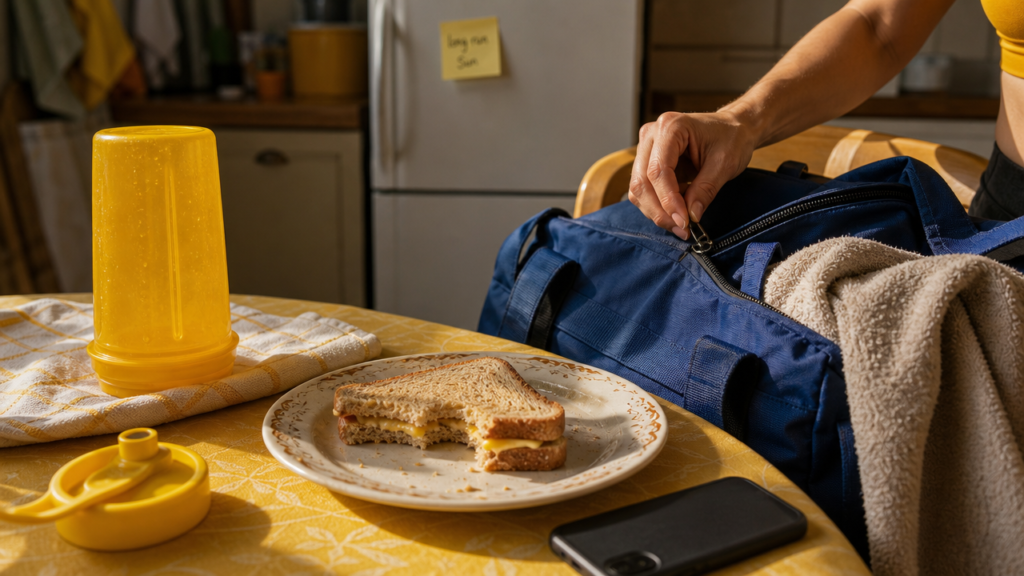
In 2017 Hakimi and Cameron pulled together what was known about exercise and ovulation for the journal Sports Medicine. In the cohort studies they reviewed, women exercising very heavily, more than an hour a day, had a higher risk of not ovulating, while vigorous exercise of 30 to 60 minutes a day went with a lower risk of anovulatory infertility. Their explanation runs through the stress axis. Heavy training, especially in someone underweight or not eating enough to cover it, creates an energy drain. Leptin drops. The hypothalamus, which sits upstream of the reproductive hormones, has every reason to treat that as a lean season and turn the reproductive signal down.
The Endocrine Society's 2017 guideline on functional hypothalamic amenorrhea (periods stopping with no structural cause) names the usual companions: stress, weight loss, excessive exercise, or a combination. That last word is the one I'd underline. A woman training for a half marathon in month nine of trying, on a lunch she skipped because she was on a call, isn't dealing with one stressor. She's stacking three, and most exercise and fertility research only measures one of them.
That's why exercise and fertility is a nervous-system question as much as a fitness one. I wrote about this in stress and fertility: the body isn't refusing, it's waiting for evidence that it's safe to go ahead. A body running a deficit every single day hasn't been given that evidence.
Reading exercise and fertility in your own training log
If you train hard and you're lean, I'm not going to tell you to stop. I'll tell you what I'd look at instead. Are your cycles the same length they were before you stepped the training up? Are you eating enough to cover the sessions on the days you train, not on average across the week? Have your periods gone lighter, later, or gone missing? Those are the questions the exercise and fertility data points at. The kilometres are only part of the picture.
His side of exercise and fertility
Most exercise and fertility advice stops at her. The men's data is thinner, and it doesn't point where people expect.
The best-known exercise and fertility study in men is a small one. In 2015 Audrey Gaskins and colleagues at Harvard published semen analyses from 189 young men in Rochester, New York, aged 18 to 22. Men in the top quarter for moderate-to-vigorous activity, fifteen hours a week or more, had 73% higher sperm concentration than men in the bottom quarter, who did under five. Television went the other way. Men watching more than twenty hours a week had 44% lower sperm concentration than men who watched none.
Neither habit was linked to how well the sperm swam or how they were shaped. These were college-aged men, too, not 38-year-olds in month fourteen. The authors point out that their most active men were probably team-sport players, and that earlier work had linked cycling specifically to lower sperm concentration, so the kind of exercise may matter as much as the hours.
Still. If one of you is training for an ultra and the other one's side of the sofa has a dent in it, the exercise and fertility data suggests the person with the bigger change to make might be him. There's more on why his ninety days count in the piece on the sperm production cycle, and on why he so rarely gets asked in what I wrote about male infertility.
Now the part that argues the other way
I've given you my reading of the exercise and fertility research. Here's why you shouldn't hold it too tightly.
Every exercise and fertility number above is observational. Women who run five hours a week aren't a random slice of women. Some of them are running away from something (work, worry, the month), and some of them carry less body fat for reasons that have nothing to do with the running. Exercise was self-reported once, at the start, and the Danish team say in their own limitations section that they didn't validate their activity questions.
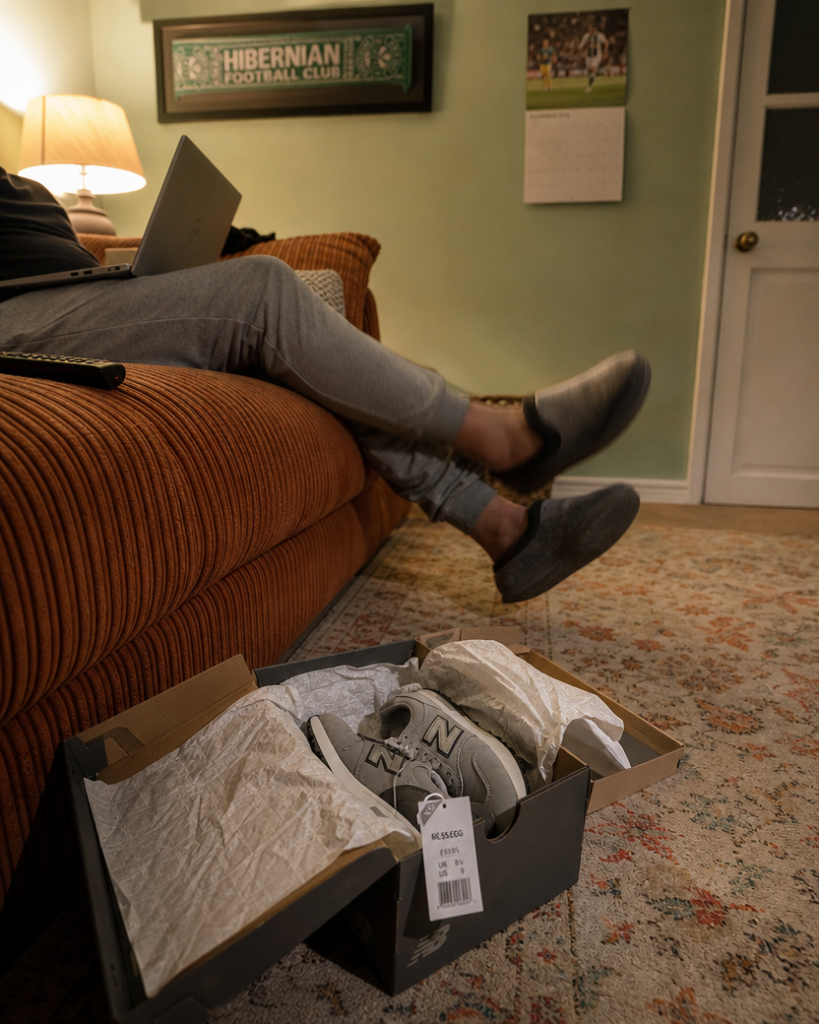
The men's study was cross-sectional: one questionnaire, one sample, one moment. It tells you which men had higher counts. It can't tell you that taking up running would raise yours, or that a higher count turns into a pregnancy.
Then there's the trial that should cool anyone selling exercise and fertility as a cure. In 2016 the New England Journal of Medicine published a Dutch randomised trial of 577 infertile women with a BMI of 29 or higher. Half did a six-month lifestyle programme before starting fertility treatment. The other half started treatment straight away. Within two years, the outcome the trial was built around, a healthy baby born vaginally at term, happened for 27.1% of the lifestyle group and 35.2% of the prompt-treatment group. The programme group lost 4.4 kg on average and still did worse on the main measure. Some of that is probably just time, since six months spent on a programme is six months not spent in treatment. But it's the biggest randomised test of the idea I could find, and it didn't deliver.
And the hole Hakimi and Cameron named is still a hole. They found no exercise trials at all in women of normal weight who weren't ovulating. For the lean runner in the first paragraph, nobody has run the experiment.
What we have are directions. Not doses.
Exercise and fertility as a two-person plan
So, narrow and practical. None of this will make anyone pregnant. What the exercise and fertility research can do is stop you pointing your effort at the wrong place.
Make moderate the default. Brisk walking counted as moderate in the Danish study, and so did gardening. It's the one category that leaned the same way for every body size, and it's the one most people already know how to do. If I could keep one piece of exercise and fertility advice for both of you, it would be this one. If you want a way in, I've written about walking meditation, and it doubles as the dose.
If you're lean and training hard, the exercise and fertility trade I'd make is simple: swap some vigorous hours for moderate ones during the months you're trying, and eat for the training you actually do. That substitution is the one the 2012 authors suggested themselves, and the fitness it costs you can be won back later.
If you're carrying more weight, vigorous exercise isn't the enemy the forums make it out to be. In the PRESTO data it went with better odds. Do the kind you enjoy and can keep up. And don't let a lifestyle plan push a clinic appointment back by six months without asking your doctor what that wait costs.
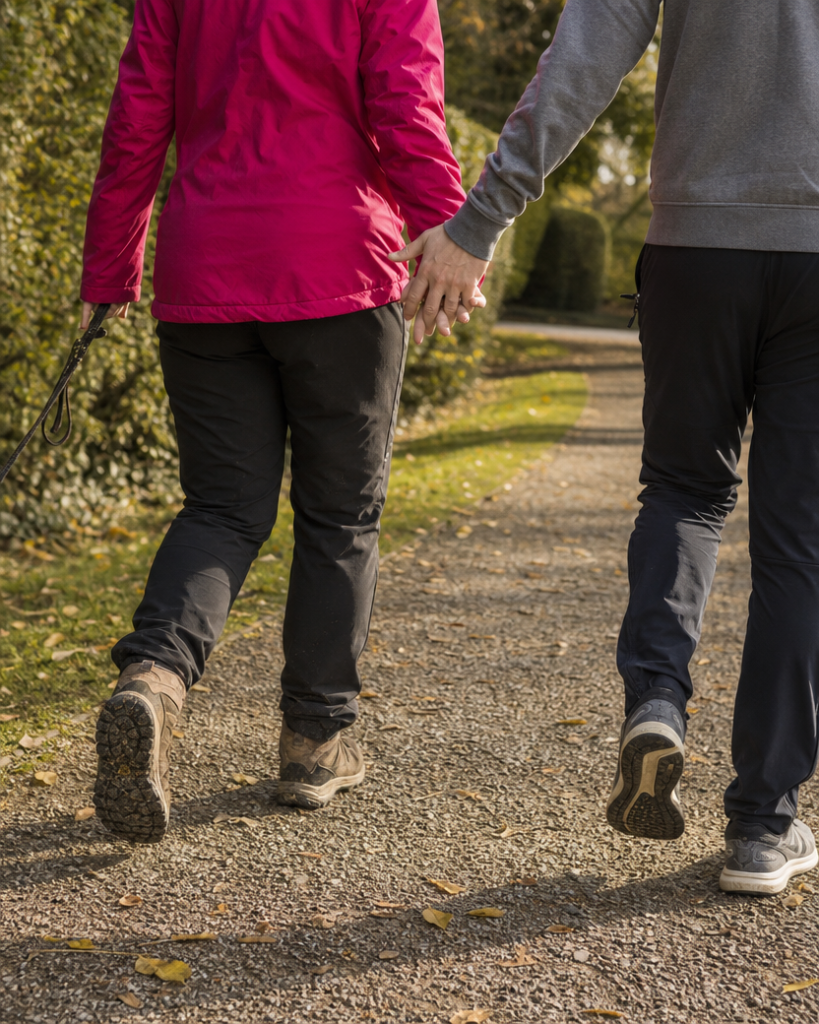
Get him off the sofa, together if you can. A walk you take as a couple counts for both of you, and it's twenty minutes in which nobody is checking an app. Same logic as the shared bedtime in the sleep and fertility piece: the effort goes where the numbers point, and that's usually two people, not one.
When exercise and fertility stop being the question
Here is the stop-line, and it matters more than any exercise and fertility number above. If your periods have stopped, spread far apart, or changed noticeably since you stepped up training or lost weight, tell a doctor, not a coach. The Endocrine Society treats that kind of amenorrhea as a diagnosis that has to rule out other causes first. And the American Society for Reproductive Medicine says evaluation for infertility should begin after 12 months of trying, or after 6 months if she's 35 or older. Both of you get checked. If the answer comes back unexplained, that word means something narrower than it sounds.
The kilometres you don't need
She'll probably keep running, and if she loves it she should. What I'd want her to know is this: in the largest exercise and fertility data I could find, fitness wasn't what got rewarded. Moving was. Walking was. The extra hard hours on top went the other way.
Some months the most useful session in the plan is the walk. Take it together.
References
Wise LA, Rothman KJ, Mikkelsen EM, Sørensen HT, Riis AH, Hatch EE (2012). A prospective cohort study of physical activity and time to pregnancy. Fertility and Sterility, 97(5), 1136–1142. https://doi.org/10.1016/j.fertnstert.2012.02.025
McKinnon CJ, Hatch EE, Rothman KJ, et al. (2016). Body mass index, physical activity and fecundability in a North American preconception cohort study. Fertility and Sterility, 106(2), 451–459. https://doi.org/10.1016/j.fertnstert.2016.04.011
Hakimi O, Cameron LC (2017). Effect of exercise on ovulation: a systematic review. Sports Medicine, 47(8), 1555–1567. https://doi.org/10.1007/s40279-016-0669-8
Gordon CM, Ackerman KE, Berga SL, et al. (2017). Functional hypothalamic amenorrhea: an Endocrine Society clinical practice guideline. Journal of Clinical Endocrinology & Metabolism, 102(5), 1413–1439. https://doi.org/10.1210/jc.2017-00131
Gaskins AJ, Mendiola J, Afeiche M, Jørgensen N, Swan SH, Chavarro JE (2015). Physical activity and television watching in relation to semen quality in young men. British Journal of Sports Medicine, 49(4), 265–270. https://doi.org/10.1136/bjsports-2012-091644
Mutsaerts MAQ, van Oers AM, Groen H, et al. (2016). Randomized trial of a lifestyle program in obese infertile women. New England Journal of Medicine, 374(20), 1942–1953. https://doi.org/10.1056/NEJMoa1505297
Practice Committee of the American Society for Reproductive Medicine (2023). Definition of infertility: a committee opinion. Fertility and Sterility, 120(6), 1170. https://doi.org/10.1016/S0015-0282(23)01971-4