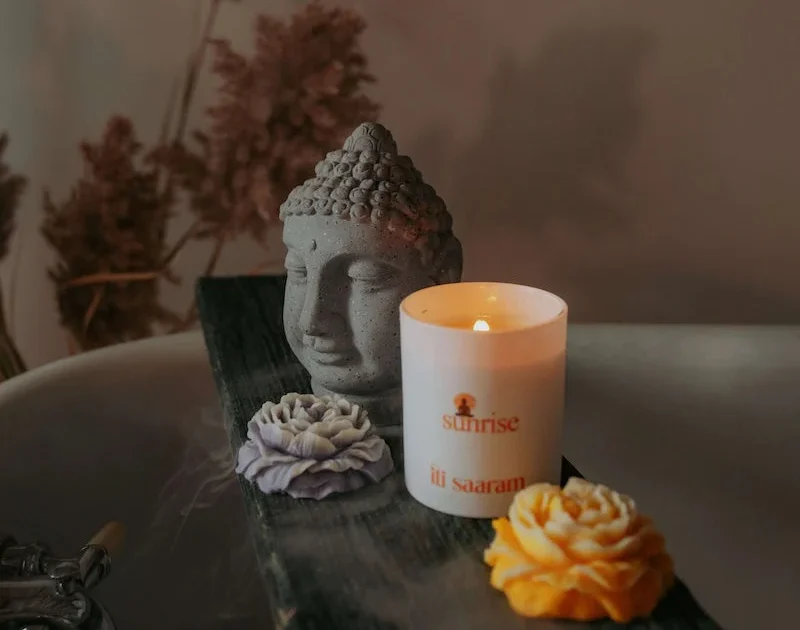
The Architecture of Daily Rituals
Healing rarely comes from single, dramatic interventions.
It emerges from repetition.
Small, consistent actions performed daily signal stability to the nervous system.
In contrast, unpredictability increases stress.
Irregular schedules, inconsistent habits, and reactive living patterns create subtle but persistent activation.
Rituals introduce predictability.
Predictability creates safety.
Safety allows the body to shift from survival into regulation.
1. Ritual vs Routine
Routines are functional.
Rituals are intentional.
The difference is not the action itself, but the awareness behind it.
Drinking tea can be routine.
Or it can be ritual.
When performed with attention—slowed movement, sensory awareness, presence—the same action becomes regulatory.
Ritual engages the nervous system more deeply than habit alone.
2. The Nervous System Responds to Repetition
Repeated behaviors create neural patterns.
When actions occur consistently at similar times, the body begins to anticipate them.
This anticipation reduces uncertainty.
Reduced uncertainty lowers baseline stress.
Examples include:
- waking at consistent times
- eating meals regularly
- repeating evening wind‑down practices
Over time, these patterns become internal anchors.
3. Morning Rituals and Cortisol Rhythm
The first hour after waking is critical for hormonal regulation.
Cortisol naturally rises in the morning.
This rise supports alertness and energy.
Morning rituals can stabilize this process.
Examples:
- exposure to natural light
- slow movement or stretching
- mindful hydration
- journaling or quiet reflection
These actions reinforce circadian rhythm.
4. Evening Rituals and Melatonin Production
Evening rituals prepare the body for sleep.
Gradual reduction of stimulation signals the brain to produce melatonin.
Effective practices include:
- dimming lights
- reducing screen exposure
- warm showers or baths
- calming music or reading
Consistency enhances effectiveness.
5. Rituals and Fertility Support
Hormonal systems respond to stability.
Irregular schedules and chronic stress can disrupt reproductive signaling.
Daily rituals that support:
- sleep consistency
- nutritional timing
- emotional regulation
indirectly support fertility.
The body interprets consistent patterns as safety.
6. Micro-Rituals Throughout the Day
Ritual does not require large time commitments.
Small moments can shift nervous system state.
Examples:
- three slow breaths before meals
- stepping outside for sunlight
- pausing between tasks
- placing a hand on the body during stress
These micro-rituals interrupt stress accumulation.
7. Ritual and Identity
Repeated actions shape identity.
When individuals engage in daily rituals, they begin to see themselves differently.
Someone who journals daily becomes a reflective person.
Someone who prioritizes rest becomes someone who values regulation.
Identity shifts reinforce behavior.
8. Creating a Sustainable Ritual Structure
Effective rituals are:
- simple
- repeatable
- flexible
- aligned with daily life
Overly complex systems often fail.
Simplicity ensures consistency.
9. Rituals During Uncertainty
Periods of uncertainty—fertility journeys, life transitions, emotional stress—benefit most from ritual.
When external conditions feel unstable, internal structure becomes essential.
Rituals provide continuity.
Continuity stabilizes the nervous system.
Closing Reflection
Healing is not built in a single moment.
It is constructed through repeated signals of safety.
A cup of tea.
A breath before speaking.
A quiet evening routine.
These small actions accumulate.
And over time, they shape a body that feels safe enough to heal.
If this is the part you're living through right now, Fertile Again! walks through the rest of it — nervous system first, biology after, for women, men, and couples trying together.