“Cuando en esta vida has caminado al lado de tus seres queridos, entonces la muerte es solo el lugar para un bello recuerdo.”
There are nights when the veil between the seen and the unseen becomes thin — nights when the air itself seems to remember. El Llamado de las Ánimas is one of those nights. It is not a festival of color and masks, nor a carnival of fear and fantasy. It is a quiet ceremony, a gentle calling, where we invite the souls of our loved ones to return — not to haunt us, but to walk beside us once more, for a few sacred hours of remembrance and gratitude.
A Ceremony of Presence, Not Absence
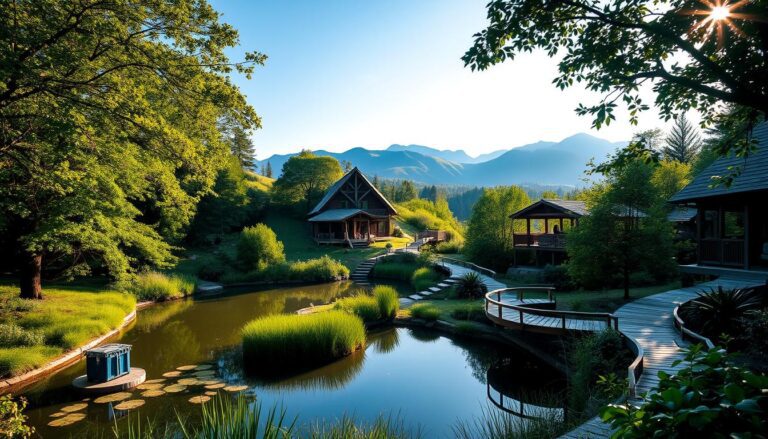
In the heart of the Yucatán, when the wind turns soft and the moonlight glides over the water, we gather by the cenote. Each person arrives carrying a small candle and a memory — a name whispered into the darkness, a story that once made us laugh, a tear that never had the chance to fall. The ceremony begins in silence, not out of mourning, but out of reverence. Because El Llamado de las Ánimas is not about loss. It is about presence — the enduring presence of love that outlives the body.
Unlike Día de Muertos, this night is not filled with marigolds and music, or sugar skulls and feasts. Here, we return to something simpler, older, and more intimate — the primal act of remembering. We do not celebrate death; we honor life. We do not dress the departed in bright colors; we call them by name, softly, like inviting a friend to sit by the fire.
The Path of the Living
Before we reach the altar, we make a slow walk toward the cenote — a sacred descent. Each step represents a layer of shedding: noise, distraction, attachment. The cenote mirrors the underworld in Maya cosmology — a portal where water meets spirit. Here we cleanse, washing away the dust of the day and the clutter of thought. We offer a flower, a sigh, a strand of hair perhaps — something of ourselves, something small yet sincere.
This act is symbolic: to call upon the souls, we must first make room for them. As the candles flicker in the water’s reflection, the group stands in stillness. The first name is spoken. Then another. And another. The voices weave together like threads of light — a bridge between realms.
The Altar and the Watch
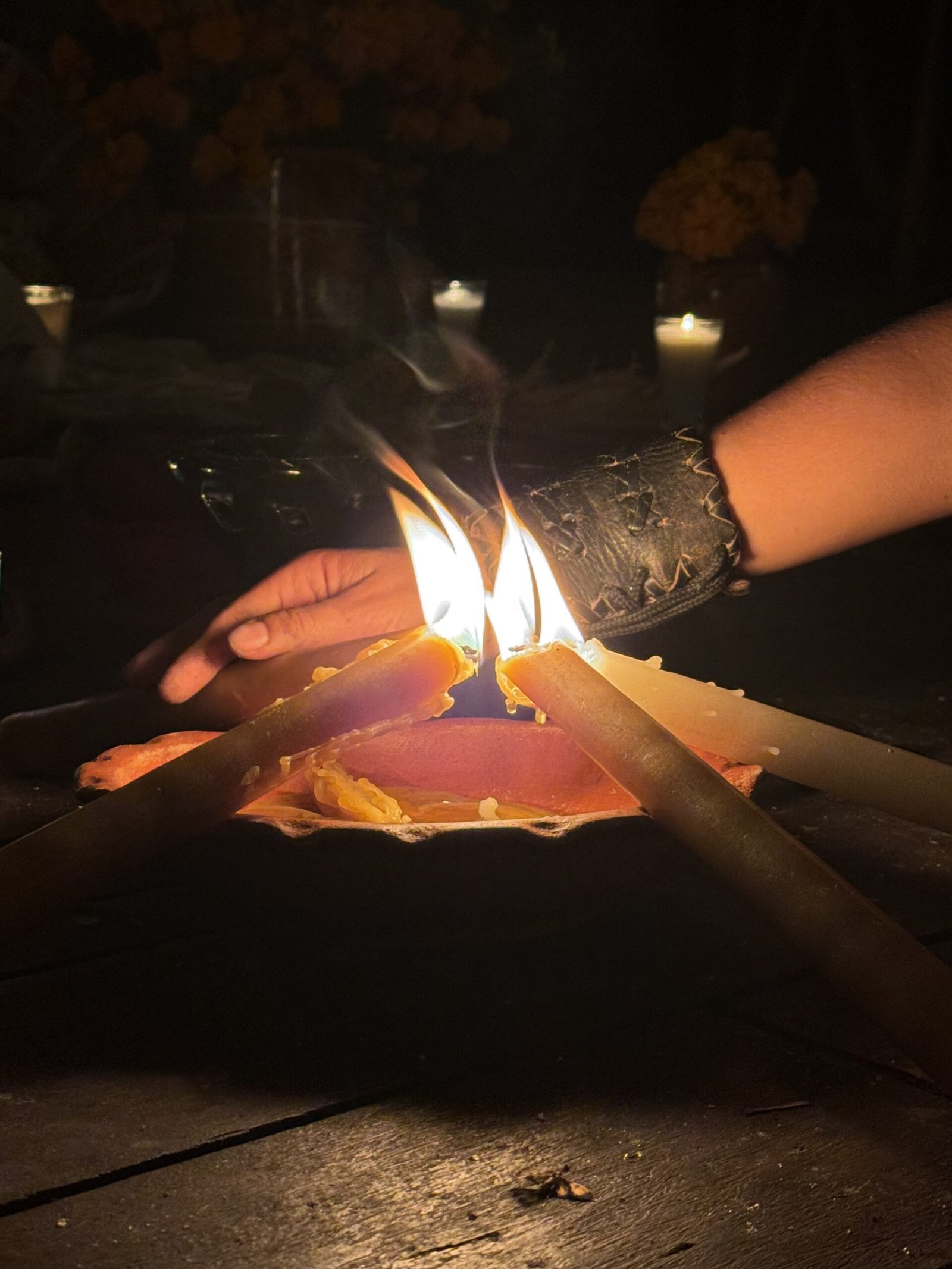
After the cenote, we return to the altar. It is simple — a table of earth and stone, adorned with candles, photos, and the fruits of the season. Each candle represents a soul we wish to honor. As we light them one by one, the room fills with the quiet dance of flame. The light is not for the dead; it is for the living — to remind us that love is a fire that does not die.
And so begins the night watch. This is the heart of El Llamado de las Ánimas. It is a time of stories and silence, of tears and laughter intertwined. Some write letters to the departed; others meditate in front of the altar, eyes closed, listening to the whisper of the candles. The air grows thick with memory, but not with sorrow. It is the density of connection — the invisible thread between all who have loved and been loved.
A Different Kind of Calling
In the modern world, we often speak of letting go — of moving on, of closure. But El Llamado de las Ánimas offers another path: not detachment, but communion. It teaches us that remembrance is not about holding on to pain, but keeping alive the vibration of love. In this sense, death becomes not an ending, but a space — a sacred pause where we can still meet, beyond time.
This ceremony does not belong to any religion. It belongs to the heart. It can be practiced by anyone who has loved, lost, and wished to say “thank you” one more time. It invites us to slow down, to step into the ancient rhythm where life and death dance as one.
When the Souls Arrive
Some say you can feel them — a sudden warmth on your cheek, a subtle scent, a candle flickering without wind. Whether it’s real or imagined doesn’t matter. What matters is the feeling that fills the space: peace, tenderness, belonging. The ancestors are not gone. They have simply changed their form.
This is the essence of the motto that guides the night:
“Cuando en esta vida has caminado al lado de tus seres queridos, entonces la muerte es solo el lugar para un bello recuerdo.”
When we have walked beside our loved ones with open hearts, death no longer separates — it transforms. The memory becomes the bridge, the altar becomes the meeting place, and we become the keepers of their light.
A Night to Remember Life
El Llamado de las Ánimas is also a mirror. As we light the candles for others, we see our own reflection in the flame. We are reminded that one day, someone will call our name too. And that thought is not frightening — it is beautiful. Because it invites us to live now, fully, kindly, and awake. To walk beside those we love, so that when our own time comes, we too will become a “bello recuerdo” — a beautiful memory — in someone’s night watch.
The ceremony ends before dawn. The candles are left to burn out naturally. As the first light appears, we gather our things in silence. Some take a small stone or flower from the altar as a keepsake. Others leave everything behind — as an offering. There are no grand farewells, only gratitude whispered to the rising sun.
How to Hold Your Own Ceremony
If you feel called to experience El Llamado de las Ánimas, you don’t need a cenote or an elaborate altar. You only need intention. Here’s a simple way to bring it to life:
- Create a quiet space — somewhere dimly lit, with candles or a small bowl of water.
- Prepare your altar — place photos, names, or symbols of your loved ones. Add elements of the four directions: water (a bowl or cup), fire (a candle), earth (a stone or flower), and air (incense or open window).
- Begin in silence. Breathe deeply. Feel your heart open.
- Call their names. Speak them softly, one by one. Remember a moment that made you smile.
- Offer light. Light a candle for each soul, saying “Gracias” — not for their absence, but for their presence in your story.
- Stay awhile. Listen. Reflect. Write. Let the night hold you.
- End with gratitude. Before extinguishing the candles, thank them for coming — and thank life for the bond that never ends. Don’t forget to close it when you finish.
The Gentle Art of Remembering
In the end, El Llamado de las Ánimas is not about ghosts or grief — it is about the invisible continuity of love. It is a ceremony for those who understand that remembrance is a form of prayer, and that memory itself is sacred ground.
As we stand before the altar, hearts open, candles glowing, the world feels softer — as if for a moment, heaven and earth breathe together.
And perhaps that is what this ceremony truly is:
a reminder that love never dies — it only changes its light.