Can a simple practice like meditation truly transform our lives and lead us to a state of profound inner peace?
As we start this journey of self-discovery, we see that meditation has many benefits. It can reduce stress and anxiety and improve our overall well-being.
This guide will teach you the basics, history, and different techniques of meditation. It aims to help you connect more deeply with yourself and the world.
Key Takeaways
- Discover the transformative power of meditation and its benefits for overall well-being.
- Learn various meditation techniques to suit your lifestyle and needs.
- Understand the history and significance of meditation in different cultures.
- Integrate meditation into your daily routine for enhanced mental clarity and focus.
- Cultivate a deeper sense of inner peace and connection with yourself and others.
What is Meditation? Understanding the Fundamentals
Meditation is a deep journey into yourself. It’s a practice that has been around for centuries. It helps you find inner peace and clarity.
This ancient practice is part of many cultures. It connects the inner and outer worlds.
The Science Behind Meditation
Meditation is more than just a spiritual practice. It’s also supported by science. Research shows it can change your brain, making you feel better emotionally and less stressed.
The brain changes include more gray matter and better connections between brain areas. These changes help with thinking and feeling.
Neuroplasticity, or the brain’s ability to change, is key in meditation research. It helps improve attention, emotion control, and memory.
Common Misconceptions About Meditation
Many people still don’t understand meditation. One big mistake is thinking you need to stop all thoughts. But meditation is about watching thoughts and feelings without judging them.
Another mistake is thinking meditation is only for certain religions or cultures. But meditation is for everyone. It can fit into any belief system.
How Meditation Affects the Brain
Meditation changes the brain in many ways. It can make areas for learning, memory, and emotions bigger. It also helps different brain parts talk better to each other.
Meditation also changes how the brain works. It can make you less stressed and anxious. This leads to feeling calmer and more at peace.
The History and Evolution of Meditation Practices
Meditation has been a part of human history for a long time. It shows our ongoing search for peace and understanding. This practice has changed and grown through many cultures and times.
Ancient Origins of Meditation
Meditation’s history goes back to ancient times. It’s found in the Vedic scriptures of India and the contemplative traditions of Buddhism. These early forms were linked to spiritual and religious practices. They aimed to reach a higher state of awareness.
Modern Adaptations and Western Adoption
In recent years, meditation has become more popular in the West. It’s been made more accessible, often without a religious focus. Now, it’s used in mindfulness and stress reduction programs. This change has helped more people see its benefits for their health.
Different Meditation Traditions Around the World
Meditation looks different in different places. From Zen practices of Japan to the Sufi whirling of Turkey, each has its own way. These traditions add to the rich variety of meditation worldwide.
Benefits of Regular Meditation Practice
Meditation offers many benefits, affecting physical health, mental wellbeing, and spiritual growth. It can greatly improve your overall wellbeing.
Physical Health Benefits
Meditation is good for your body. It can lower blood pressure, reduce chronic pain, and improve sleep. It also strengthens your immune system by reducing stress.
A study in the Journal of the American Medical Association (JAMA) found that mindfulness meditation helps with chronic pain. It also improves life quality.
“Mindfulness meditation may be a useful adjunct to conventional treatments for chronic pain.”
Mental and Emotional Wellbeing
Meditation helps with mental and emotional health. It reduces stress, anxiety, and depression. It also helps you handle tough situations better.
“The practice of meditation fosters a greater awareness of the present moment, reducing worries about the past or future.” This makes you more emotionally resilient and positive.
Spiritual Growth and Self-Discovery
Meditation aids in spiritual growth and self-discovery. It helps you understand yourself better, including your values and purpose.
Through meditation, you can grow in compassion and empathy. The Dalai Lama once said,
“If you want others to be happy, practice compassion. If you want to be happy, practice compassion.”
Research-Backed Benefits
Many studies support meditation’s benefits. They show it’s good for both physical and mental health. Regular meditation can even change your brain, improving how you think and feel.
Adding meditation to your daily routine can bring these benefits to life. It leads to a more balanced and fulfilling existence.
Creating Your Meditation Space
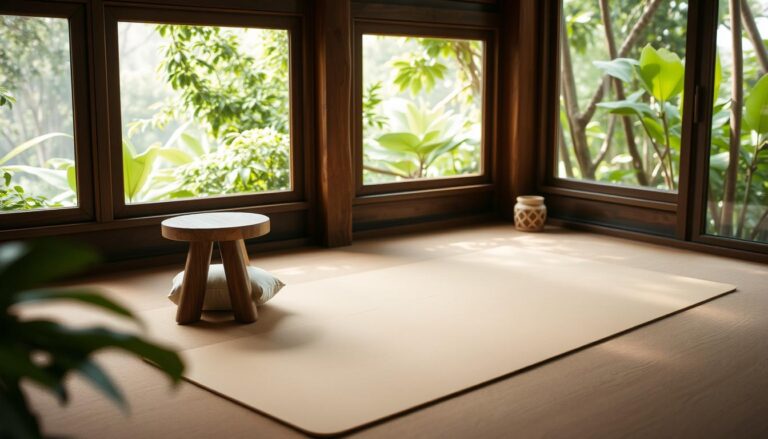
Creating a calm meditation space is key to a deep practice. The place you meditate in greatly affects your ability to relax and focus. It also helps you connect with your inner self.
Essential Elements for a Peaceful Environment
A peaceful meditation area has calmness, serenity, and few distractions. Think about the ambiance, lighting, and comfort of your space. Soft, natural light creates a soothing mood. Comfortable seating helps you relax and stay focused.
Adding elements of nature, like plants or a water feature, makes your space more tranquil. The sound of water or the sight of greenery calms the mind. It helps you relax deeper.
Minimizing Distractions
It’s important to keep distractions away to focus during meditation. Choose a quiet spot for your space, away from daily noise. Less noise pollution means better concentration and relaxation.
Also, try to cut down on digital distractions. Turn off phone notifications or use a meditation app to stay on track.
Tools and Props to Enhance Your Practice
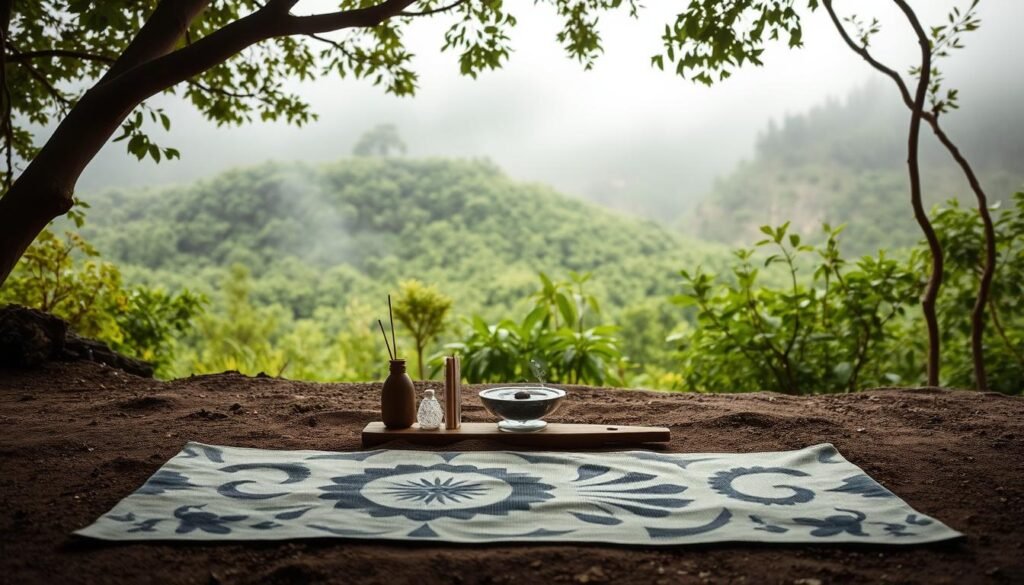
There are many tools and props to improve your meditation. Meditation cushions or chairs support your posture. Incense or calming scents add to the peaceful vibe, reducing stress.
Other items like calming candles, meditation timers, or guided recordings can also enrich your experience. Try different tools to see what works best for you.
Complete Meditation Guide From A to Z: Core Techniques
Meditation has many techniques that help us find peace and calm. Each method offers a special way to practice mindfulness and kindness. They help us connect with our inner selves.
Mindfulness Meditation
Mindfulness meditation helps us focus on the now. We might watch our breath or feel our body. It teaches us to accept the moment without judgment.
Studies show it lowers stress and boosts our mood and thinking skills.
Focused Attention Meditation
This meditation makes us concentrate on one thing, like our breath. It helps us stay focused and think clearer. When our mind drifts, we gently bring it back.
This builds mental discipline and sharpens our focus.
Loving-Kindness Meditation
Loving-kindness meditation, or metta, fills us with love and kindness. We say kind phrases to ourselves and others. It helps us feel more connected and understand others better.
It’s great for our emotional health and building relationships.
Body Scan Meditation
In body scan meditation, we focus on our body, starting from our toes. It helps us relax and release tension. By noticing our body without judgment, we reduce stress and feel better.
Visualization Meditation
Visualization meditation uses our imagination to create a scene. It could be a calm place or a symbol of strength. It helps us change our mindset and feel better mentally and emotionally.
Trying out these meditation techniques can help us find what works best for us. We can then make meditation a regular part of our lives, leading to a more fulfilling experience.
Meditation Postures and Proper Alignment
Starting a meditation journey means choosing the right physical posture is key. The way your body is aligned affects your comfort, mental focus, and spiritual growth. It’s all about finding the right balance.
Seated Positions
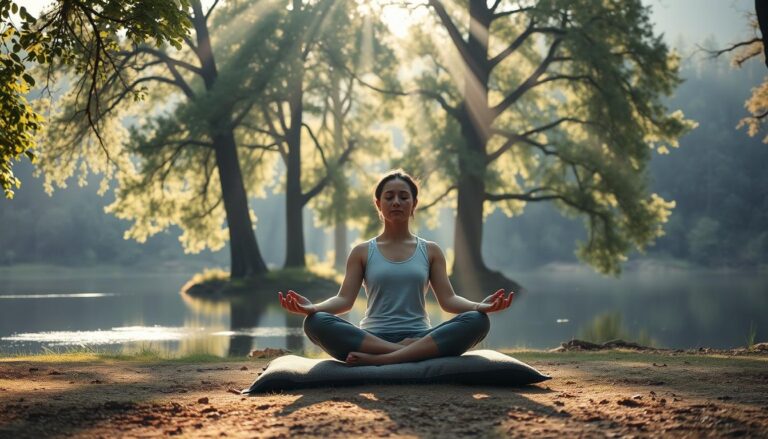
Seated meditation, like the lotus or cross-legged, is popular for its stability. Proper alignment means keeping your spine straight, shoulders relaxed, and head calm. This setup helps you breathe freely and stay focused.
Lying Down Meditation
Lying down can be a good option if sitting is hard. But, it’s important to stay awake. You should relax but stay alert, focusing on deep, belly breathing.
Walking Meditation
Walking meditation is a moving option that keeps you mindful. It turns walking into a deep meditation experience.
Addressing Physical Discomfort
No matter the posture, it’s vital to avoid discomfort. You might need to adjust your position, use props, or stretch before meditating. This helps you find a comfortable and lasting posture.
Breathing Techniques for Deeper Meditation
When you start meditating, your breath becomes a key tool. It helps refine your practice and connect you to the present. Breathing consciously is essential for a deep meditative state, affecting both your mind and body.
Diaphragmatic Breathing
Diaphragmatic breathing, or belly breathing, uses the diaphragm muscle. It’s between your chest and belly. This method helps you breathe fully, slow your heart, and relax.
By focusing on your belly moving up and down, you keep your mind in the moment. It helps you let go of thoughts that distract you.
Counted Breath
The counted breath method assigns a count to each breath. It’s a simple way to stay focused. Counting your breaths keeps your mind from wandering and helps you feel calm.
This is great for beginners. It gives you a clear focus point to start with.
Alternate Nostril Breathing
Alternate Nostril Breathing, or Nadi Shodhana, balances your breath through each nostril. It’s a yogic technique. It’s thought to balance your brain and prepare your body for meditation by clearing energy channels.
Box Breathing for Stress Relief
Box Breathing is used to calm and focus. You breathe in for four counts, hold for four, breathe out for four, and hold again for four. This creates a “box” shape with your breath.
It helps calm your mind and body, especially when you’re stressed.
Using these breathing techniques in meditation can improve your relaxation, focus, and meditative state. The breath, when controlled, is a powerful tool for change and peace.
Overcoming Common Challenges in Meditation
Meditation is rewarding but comes with challenges. These hurdles need understanding and effort to get past. As we explore our minds, we face obstacles that can either block or enrich our practice.
Dealing with a Wandering Mind
One big meditation challenge is a wandering mind. Many find their thoughts racing or wandering off. To tackle this, try acknowledgment. Gently notice the thought without judgment and refocus on your meditation object.
Finding Time to Meditate
Finding time to meditate is hard in today’s fast world. Start small with short, daily sessions. Gradually increase time as you get more into it. Make meditation a part of your daily routine, like right after waking or before bed.
Maintaining Consistency
Maintaining consistency is key to meditation’s benefits. Set a regular schedule and have a special meditation spot. View meditation as a journey, embracing its ups and downs with patience and kindness.
Working Through Emotional Resistance
Emotional resistance can pop up, bringing up old emotions or traumas. Handle these moments with kindness and understanding. If needed, seek help from meditation teachers or mental health experts.
By tackling these common challenges, we can deepen our meditation. This leads to a deeper connection with ourselves and the world.
Advanced Meditation Practices
As people dive deeper into meditation, they look for more advanced techniques. These practices help them grow spiritually and personally. They aim to cultivate deeper states of consciousness, connecting them more deeply with themselves and the world.
Exploring advanced meditation starts with knowing its different types. Vipassana Meditation is one, where you observe the changing nature of everything, gaining insight into reality.
Vipassana Meditation
Vipassana, or insight meditation, comes from ancient Buddhist teachings. It focuses on careful watching of the breath, body feelings, and thoughts. The goal is to understand that everything is constantly changing.
Transcendental Meditation
Transcendental Meditation uses a mantra to go beyond regular thinking. It leads to a deeper state of awareness, where you feel calm and alert.
Chakra Meditation
Chakra Meditation targets the energy spots in the body. It aims to balance these spots for better health and well-being.
Sound Bath Meditation
Sound Bath Meditation uses sounds from gongs and singing bowls. It brings deep relaxation and healing, creating a meditative state through sound.
Self-Inquiry Meditation
Self-Inquiry Meditation is inspired by Ramana Maharshi. It involves deep self-reflection, asking questions about who you are to find deeper truths.
These advanced meditation practices lead to deep personal change. They help people explore their consciousness and find peace and unity.
Conclusion: Integrating Meditation into Your Daily Life
As we finish this Complete Meditation Guide From A to Z, we see meditation’s true value. It’s not just about knowing its parts. It’s about making it a part of our everyday life. We’ve explored meditation’s history, science, and many techniques.
Making meditation a daily habit changes us deeply. It brings peace, clarity, and purpose. It helps us face life’s ups and downs better. Regular meditation leads to a deeper understanding of ourselves and the world.
Consistency and patience are key to a good meditation practice. Just a few minutes each day can bring great benefits. It adds calm, clarity, and spiritual growth to our lives.
FAQ
What is the best time to meditate?
Early morning or late evening are great times to meditate. The mind is calm, and it’s quiet. Pick a time that works for you and helps you meditate regularly.
How long should I meditate for as a beginner?
Start with 5-10 minutes as a beginner. Then, you can increase the time as you get more comfortable. This keeps you consistent and avoids getting frustrated.
Can meditation be practiced by anyone, regardless of age or physical condition?
Yes, anyone can meditate, no matter their age or health. There are many techniques and ways to meditate that fit different needs. It’s for everyone.
What is the difference between mindfulness meditation and focused attention meditation?
Mindfulness meditation is about being present without judgment. Focused attention meditation is about concentrating on something to calm your mind and emotions.
How can I create a conducive environment for meditation?
For a good meditation space, reduce distractions and make it quiet and comfy. You can use candles, incense, or a special chair to help.
Can meditation help with stress and anxiety?
Yes, meditation can reduce stress and anxiety. It helps you relax, manage your emotions, and feel stronger. Regular meditation can make you feel much better.
What are some common challenges faced during meditation, and how can they be overcome?
Challenges include a wandering mind, finding time, and staying consistent. Overcome these by being patient, setting achievable goals, and making meditation a daily habit.
Is it normal to feel emotional or uncomfortable during or after meditation?
Yes, it’s normal to feel emotions or physical sensations during or after meditation. It’s a natural part of the process. Recognizing these feelings can help you heal and grow.
How can I maintain a consistent meditation practice?
To stay consistent, set a regular time, start small, and be kind to yourself. Having a meditation buddy or joining a community can also help.
Can meditation be combined with other practices like yoga or tai chi?
Yes, meditation works well with yoga or tai chi. These practices share goals like improving mindfulness and balance. They prepare your body and mind for deeper meditation.